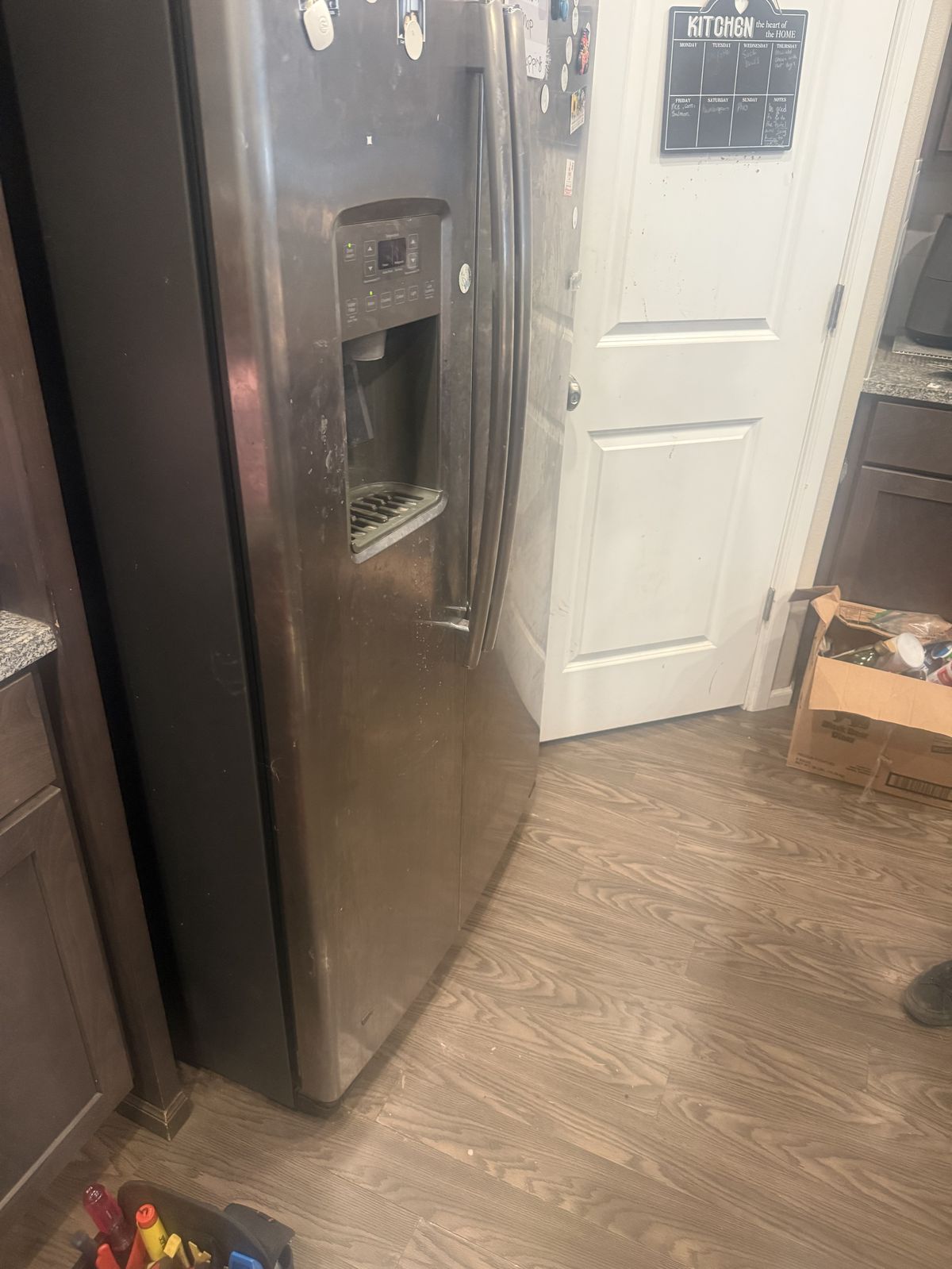
The filter change took five minutes, and the ice maker has been sulking ever since. Harvests have shrunk to thin, hollow little cubes, or nothing lands in the bin at all, and pressing the water paddle gets a cough and a spit instead of a stream. It is natural to blame the new cartridge, but the cause is usually something the swap disturbed: air trapped in the lines, a cartridge a few degrees short of locking, or an ice maker shut-off bumped during the job. Work through the checks below in order, and most of these problems end before anyone opens a panel.
What a cartridge swap disturbs
When the old cartridge comes out, the filter housing and part of the tubing drain, and the new cartridge goes in full of air. Air compresses and water doesn't, so until that air is pushed out, the line delivers sputters instead of a steady stream. That matters more to the ice maker than to the dispenser. Many ice makers time the fill, holding the inlet valve open for a fixed few seconds per cycle. If part of that window pushes air instead of water, the mold fills only partway, and you get small, thin or hollow cubes. A big enough air pocket can stall the fill almost entirely.
Fresh carbon cartridges also release fine black particles, called carbon fines, in their first gallons. They are harmless but can tint the first water gray and leave specks in early cubes. Neither air nor fines means the new filter is defective; both mean the swap isn't finished yet. If you skip the purge, the ice maker often sorts itself out over a few days of poor ice. The risk is that slow, dribbling fills in the meantime freeze inside the fill tube, and that turns a nuisance into a repair that needs the freezer's back wall opened up.
Purging the line the right way
Set a large pitcher under the water dispenser and press in short bursts with brief pauses between them, rather than one long hold. The pauses let trapped air gather so the next burst can push it out. Keep going until the stream runs steady and clear with no spitting. The exact amount varies by model, and your owner's manual lists it, usually a few gallons. Pour the purge water on houseplants or the garden rather than drinking it. If the dispenser was already slow before the swap, the purge may take longer, and that is a clue worth remembering for later.
Then deal with the ice. The first few batches after a swap belong in the sink, because they can hold carbon specks or come out undersized from the air pockets. Give the ice maker a full day to settle back into normal cycles; most drop a batch every few hours once running, and a full bin takes longer still. If your model has an ice maker on and off control on the display or on the ice maker itself, make sure it is on. Resetting the filter reminder light is a separate step; it tracks time or gallons and has no effect on ice production at all.
Seating, bypass plugs and the arm that got bumped
A cartridge that is almost seated is one of the most common causes of trouble after a swap. Twist-in filters need a firm push and a turn until they stop with a definite feel, usually with the label lined up as the manual shows; push-in filters should click and sit flush. A cartridge stopped short can leave the valve inside the filter head partly closed, which restricts flow, or it can leak at the head. Pull it out and reinstall it, watching the alignment marks. A drip at the head that continues after reseating means shutting off the water supply and calling us.
While you're there, check the ice maker itself. Many have a wire bail or feeler arm that stops production when raised, and an arm nudged up while someone rearranged freezer shelves turns production off without any warning light. Others use a small rocker switch on the ice maker housing. Some refrigerators need a bypass plug to run water without a cartridge, and a few won't supply water at all with the housing empty. If the old filter came out days before the new one arrived, that alone explains a quiet ice maker in the meantime.
Where our crew works
Tap a town on the map to open its page. Our crew covers Olympia, Lacey, Tumwater, Yelm, Tenino and Rainier.
The cartridge itself: right number, right fit
Filters that look alike don't always fit alike. A cartridge built for a different model, or one made with loose tolerances, can seal poorly at its O-rings, leak at the head or restrict flow enough to starve the ice maker. Match the part number from the old cartridge or the owner's manual, not just the shape. Before installing, make sure the O-rings are present, seated in their grooves and undamaged. A rolled or pinched O-ring is a common source of a drip that shows up under the crisper drawer or on the floor a day after the swap.
Water in the wrong place after a filter change deserves quick attention. A slow leak inside the fresh-food compartment can run under the crisper drawers or freeze in the defrost drain, and a leak at a filter housing behind the base grille can soak the subfloor before anyone notices. Nearly half of Olympia's homes were built before 1980, and plenty of older kitchen floors sit over crawlspaces that hide slow leaks for months. If water keeps appearing, shut off the refrigerator's supply valve, put a towel down and call us.
Supply problems the new filter brought to light
Sometimes the filter is only the messenger. An old cartridge that was already restricting flow can mask a weak supply, and the new one exposes it. Older homes often feed the refrigerator from a self-piercing saddle valve clamped to a copper pipe, and those small valves clog and close up over the years. A refrigerator pushed back after cleaning can kink its supply line. In rural homes around Yelm, Tenino and Rainier that run on private wells, a pressure tank cycling low or a burst of sediment from the well can starve the inlet valve, which only opens all the way when enough pressure stands behind it.
A few checks are safe to do yourself. With the refrigerator unplugged, ease it forward and look for kinks or flattened spots in the supply line. Run the kitchen faucet and note whether the household pressure seems normal. On a well, watch the pressure gauge at the tank while someone runs water inside. If your water carries iron or sediment, expect the new cartridge to clog sooner than the box suggests. Leave the inlet valve, the saddle tap and anything behind the refrigerator's rear panel to our technicians, since those sit next to wiring and live water lines.
Still no ice a day later: the real faults
If the line is purged, the cartridge locked, the arm down, the supply strong and the ice maker still hasn't dropped a full harvest after a day, the problem is real. The usual suspects are a fill tube frozen solid by weak, dribbling fills, an inlet valve that happened to fail around the same time, a nicked O-ring at the filter head starving flow, or an ice maker that has stopped cycling. A freezer running warmer than about 0°F can also keep the ice maker from starting a harvest, since most wait for the mold to get cold enough. Our technicians test them in that order, and common inlet valves and ice maker assemblies travel on the van.
Care tip: Before your next filter change, set out a large pitcher and a towel, write the date on the new cartridge and check its O-rings. After installing it, purge in short bursts until the stream runs clear, and toss the first few harvests. Those extra ten minutes save days of hollow cubes.
Questions we get about this
How soon should ice come back after I swap the cartridge?
Once the line is purged, the first harvest usually drops within a few hours, and normal production returns within about a day. Discard the first two or three batches. If the bin is still empty after 24 hours, or the cubes stay small and hollow, check the shut-off arm or switch and the cartridge seating, then call us if nothing changes.
Why does my water come out spitting and gray with the new filter?
Spitting is trapped air working its way out, and the gray tint is carbon fines, harmless particles that rinse out of a fresh cartridge. Keep dispensing in short bursts until the stream runs steady and clear. If spitting continues after several gallons, the cartridge may not be fully seated, or the supply line may be kinked or partly closed.
Can I run my Olympia refrigerator without a cartridge until the right one arrives?
Some models allow it with a bypass plug that comes with the refrigerator or is sold separately; others shut off water entirely when the housing is empty. Your owner's manual will say which. Olympia's soft city water is gentle on the inlet valve in the meantime, but install the correct cartridge as soon as it arrives and purge the line afterward.
Still no ice after the purge?
We test the fill tube, valve and ice maker in order, then write one fixed quote. Our $97 diagnosis is subtracted from the repair when you approve it; if you'd rather not, it simply covers the visit.