Ice Maker Repairs Are Usually Quick Work
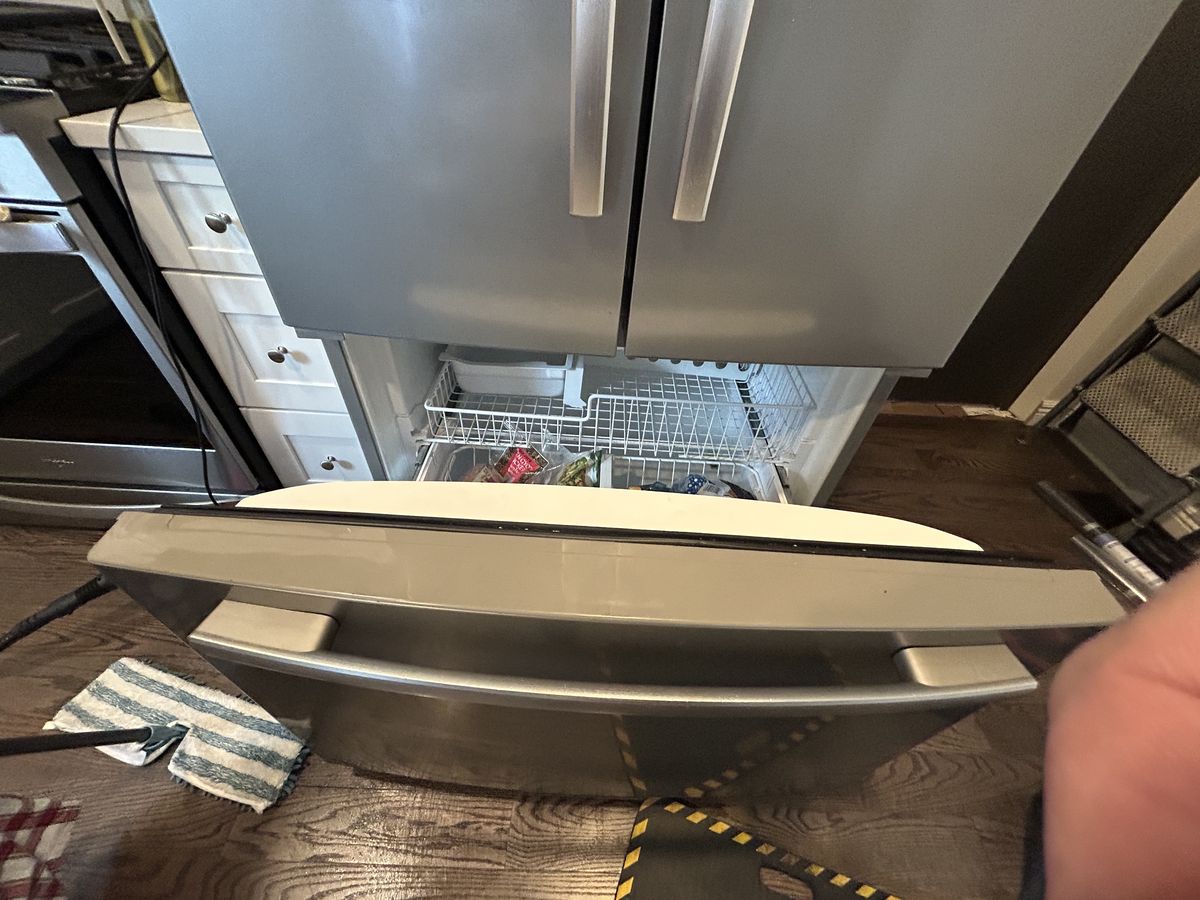
Ice makers that quit making ice keep our phones busy, and they rank among the quickest jobs we put right. The parts are small and the failures repeat themselves, so the short list of likely culprits (a worn module, a tired inlet valve, a choked filter, a fill tube iced shut) is something our vans already carry or can clear on the spot. Our technicians repair built-in ice makers and through-the-door ice and water dispensers in refrigerators across Olympia, Lacey, Tumwater, Yelm, Tenino and Rainier, from side-by-sides and French-door refrigerators in Hawks Prairie and Tahoma Terra kitchens to older top-mount units with add-on ice makers in Westside and Goldcrest homes. On a typical visit we confirm the cause, replace the part, and leave with the first fill cycle already underway.
We test along the path the water takes, starting with the simplest and most likely point. First comes the supply: the shutoff valve, the tubing behind the refrigerator and the water pressure reaching it. Next is the filter, since a clogged one starves the ice maker and produces small, hollow or crescent-shaped cubes. Then we check the water inlet valve, which can weaken, clog or drip between cycles and freeze the fill tube solid. After that we test the ice maker module itself, including its motor, thermostat and shut-off arm, with a forced test cycle. We also measure the freezer temperature on every call, because an ice maker sitting in a freezer that runs too warm will make little ice no matter how healthy its own parts are.
Through-the-door dispensers add an auger motor, a crusher, a chute door and a few switches, and those fail in their own predictable ways, often because cubes have frozen together in the bucket. We sort those out on the same visit. Before we replace anything, you get one written quote with the full price of the repair. Give us the green light and the $97 diagnosis shrinks that quote by the same amount; if you would rather leave things as they are, you pay the $97 and nothing else. Now and then a module or board made only for your model needs ordering; when it arrives, we return and fit it without charging for a second trip. Whenever the freezer is cold enough, we run a test harvest before leaving so you can see ice drop.
Ice Maker and Dispenser Problems We Fix
- No ice at all. When the bin stays empty, we start with the simple things: a raised shut-off arm or a switch turned off, or a freezer sitting too many degrees high for the module to start a harvest. Next come a fill tube blocked by ice, an inlet valve that has stopped opening, and a module whose motor or thermostat has quit. A forced test cycle tells us which part is not responding.
- Small, hollow or crescent cubes. When each fill delivers too little water, the mold turns out shrunken cubes. The usual causes are a clogged filter, low water pressure, a kinked line, or sediment clogging the screen at the valve, which is common on private wells. We check the pressure at the valve, time the fill, look at the filter’s age and condition, and inspect the screen before replacing any part.
- Cubes frozen into one block. Ice that fuses into a solid mass in the bucket usually comes from infrequent use, a freezer temperature that swings above freezing during an outage, or a leaking inlet valve dripping onto the cubes between cycles. In-door ice compartments with a worn seal let damp kitchen air in and glaze the cubes together. We check the valve, the compartment seal and the freezer temperature, then clear the bucket.
- Dispenser grinds but no ice comes out. If you hear the motor but no ice drops, cubes have often frozen together around the auger. Empty the bucket, break up the mass and let the parts thaw before trying again. If a clean bucket still will not dispense, we check whether the auger turns, whether the motor coupling has stripped, and whether the auger motor gets power when the paddle is pressed.
- Crushed works, cubed doesn’t. When the dispenser crushes everything even on the cubed setting, the small solenoid or door that lets whole cubes bypass the crusher blades is usually stuck or has failed. The reverse happens too, and a cube jammed in the crusher can bend a blade or crack the housing. We test the solenoid, check the bucket parts for damage, and confirm both settings work before we close up.
- Water on the freezer floor. Water or ice on the freezer floor below the ice maker often means the fill tube froze, so the next fill overflowed the mold instead of entering it. A leaking inlet valve, a cracked mold or a misaligned fill cup can do the same. We thaw the fill tube, watch the valve for dripping between cycles, and confirm the ice maker sits level and the water lands in the mold.
The Small Parts Behind Most Ice Maker Repairs
- Water inlet valve. Mounted on the refrigerator’s back panel, this solenoid valve opens only briefly each cycle to send water to the ice mold. Its coil can fail, its screen can clog with sediment, and a worn seat can drip between fills and freeze the fill tube. We test the coil, measure flow and watch for weeping.
- Fill tube. A short tube carries water from the valve into the freezer and the mold. When the valve drips or damp air reaches it, ice builds inside until no water passes. We thaw and clear it, check the small heater on models that use one, and fix whatever caused the freeze.
- Ice maker module. The module holds the motor, thermostat and ejector that push cubes out of the mold. On many models it is replaced as one assembly, which keeps the repair quick. We run a forced harvest, check the shut-off arm or sensor, and replace the module only after the water path checks out.
- Auger motor and auger. Behind the ice bucket, the auger motor turns a spiral that pushes cubes toward the chute. Fused ice, stripped couplings and worn motors stop it. We test voltage at the motor, turn the auger by hand, and check the coupling and bucket for cracks before replacing anything.
- Chute door and crusher solenoid. The chute door closes after each dispense to keep warm, damp air out of the freezer, while the crusher solenoid switches between cubed and crushed. A door that sticks open frosts the chute and drips on the floor. We test the door motor or spring and the solenoid, then cycle both settings.
Where our crew works
Ice Maker Repair across the South Sound, with same-day slots when the schedule allows. Tap a town for its page.
City Water, Iron Wells, Humidity and Outages
Ice is where water quality shows first. On Olympia’s soft city supply, about 50 to 60 mg/L, valves and filters stay clean, so ice makers there tend to run for years. Lacey’s water comes from roughly 20 wells of its own and runs soft to moderately hard; for iron and manganese, a handful of those wells read slightly past the aesthetic guideline. Yelm draws from three wells and treats with chlorine and pH adjustment, so an exhausted filter can let a chlorine taste through, while Clearwood has its own community water department. On private wells around Tenino and Rainier, iron and manganese tint cubes, clog filters early and pack valve screens. Humidity near 80 percent frosts door chutes, and windstorm outages thaw and refreeze the bin into a single block.
Refrigerator Ice Makers We Repair
A refrigerator still inside its original warranty usually has the ice maker covered as well, and that coverage should come first; we mention it when you call. Otherwise, our technicians repair ice makers and door dispensers in Whirlpool, KitchenAid, Maytag and Amana refrigerators, which share many valves and modules; LG refrigerators that store ice in the door, whether side-by-side or French-door; GE, GE Profile and Café; Frigidaire and Electrolux; Kenmore models of every age; and built-in Sub-Zero units. We also add ice makers to refrigerators built to accept one. The model number sits on a label inside the fresh-food compartment, usually on a side wall; read it to us when you call, and the right valve or module comes along.
Repair the Ice Maker, Replace It, or Switch It Off
Ice maker repairs are nearly always worth doing. Valves, fill tubes, modules, auger motors and filters are small parts, and these repairs are among the shortest jobs we do. The real decision comes when the ice maker’s trouble is a symptom of something bigger. If the freezer is warm because of a failing compressor or a refrigerant leak, the question becomes whether the refrigerator itself is worth repairing, and we answer that with readings rather than guesses. Other households would rather shut the ice maker down for good and cap its water line than repair a dispenser they rarely use, which is a reasonable choice we can set up. Either way, you see every option in writing before any work starts.
Care tip: Swap the refrigerator’s water filter when it comes due, or earlier on a private well if cubes shrink or flow slows. After each change, run several glasses through the dispenser to clear air and carbon fines, and toss the first two batches of ice. Make sure the filter clicks fully into place, since a loose one can stop the water.
Service by town
Repair guides
Book ice maker repair
One fixed quote after diagnosis. $97 diagnostic, applied to the repair if you go ahead.