Lacey dishwashers, from 1960s remodels to builder kitchens
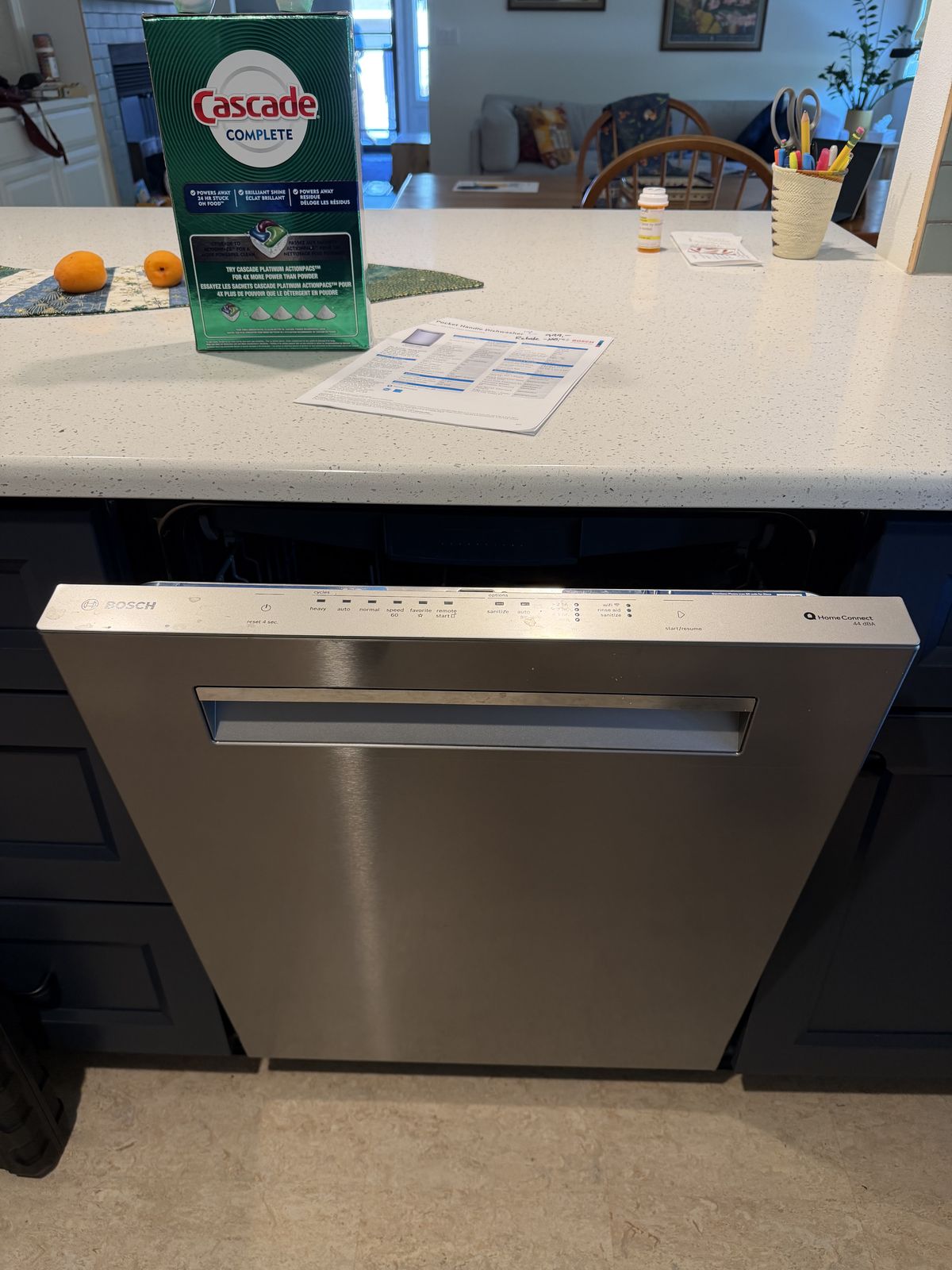
Dishwasher calls in Lacey cover a wide spread of kitchens. Thompson Place homes from the 1960s have been remodeled more than once, and their dishwashers often sit on plumbing that predates them. Houses around the lakes, built between the late 1980s and the early 1990s, are usually on a second or third machine. Newer neighborhoods, which account for more than 40 percent of the city's homes, often still run a builder-grade unit, or a quieter Bosch or KitchenAid that replaced it. The complaints sound alike from one kitchen to the next: water left in the bottom, a puddle on the floor, dishes that come out gritty or wet, a cycle that stops with a code. What differs is the cause behind the complaint, and that is why our team tests before we quote a single part.
Diagnosis begins down at the sump. Our technician pulls the filter, looks into the sump, tests the drain pump together with its check valve, and traces the drain hose to the sink to make sure it rises in a high loop or passes through an air gap. Fill problems lead us to the inlet valve, its screen and the float switch. Cleaning complaints get a look at the spray arms, the circulation pump and the water temperature reaching the machine. Drying complaints point to the heating element, rinse aid reservoir, vent or high-limit thermostat. We read stored error codes on Bosch, Miele, KitchenAid, Whirlpool, GE, Samsung, LG, Frigidaire and Electrolux models. Once a repair is done, we stay for a full wash and rinse with the toe kick off and our eyes on the door seams.
Lacey water and what it leaves on dishes
About 20 wells feed Lacey's city system, and depending on which one reaches your tap, the water lands anywhere between soft and moderately hard; glassware shows the difference. On the soft end, a full detergent pod can be more than the water needs, and the excess etches glasses with a permanent cloud. On the harder end, white spots appear but wipe off with vinegar. In a handful of those wells, iron and manganese sit just over what the aesthetic rule allows, and over time that can stain the tub and racks tan or gray and put grit on the inlet valve screen. Private wells outside the city carry more, and septic homes do better with heavy cycles spaced out. Windstorm outages can stop a cycle mid-wash; most machines resume, but some control boards need a reset or log a fault.
Dishwasher notes from Lacey neighborhoods
- Jubilee. Homes in this 55-plus community date from 2004, and in a two-person household a dishwasher may run only a few times a week. Light use lets food dry hard in the filter and lets door and pump seals stiffen. We clean the sump, check the seals and set rinse aid and detergent for the real load size.
- the Lakes (Long, Hicks, Pattison). Lake-area homes built between the late 1980s and the early 1990s have usually replaced the original dishwasher, sometimes with a European model that fits the cabinet differently. A tub that is not anchored or leveled can leak at the door. We check mounting brackets, leveling legs and the drain connection along with the machine itself.
- Horizon Pointe. The dishwashers builders put in here are now old enough that we find drain pumps humming without pumping, inlet valves dripping and door latches that no longer catch. Those parts are usually on our van. We also check whether the drain hose kept its high loop through any sink or counter work, since a missing loop lets dirty water siphon back into the tub.
- Thompson Place. In a 1960s kitchen, a newer dishwasher often shares the sink cabinet with older shutoff valves and drain pipes. A slow drip can hide under the floor for weeks. We look at the supply line, the valve and the drain connection, using a flashlight and a dry towel to find where the water starts.
Where our crew works
We cover all of Lacey, from Hawks Prairie, Horizon Pointe, Meridian Campus, Jubilee to the streets between. Tap a town on the map for its page.
Dishwasher symptoms we find in Lacey kitchens
- Standing water in a builder-grade tub. Some models normally keep a little water in the sump; an inch or more is a fault. Our technician clears the filter, looks for kinks and clogs from the hose to the sink connection, and puts the pump and its one-way valve through a test. On Lacey's aging builder units, a humming pump that leaves the water sitting usually has a jammed impeller or a failed motor.
- Etched glasses on soft city water. If the haze stays after you soak a glass in white vinegar, it is etching, not film, and it is common on Lacey's softer water when detergent is overdosed. No part can undo etching, but we confirm water temperature, dosing and rinse aid so the rest of your glasses stay clear.
- Toe-kick puddle after a remodel. Water at the front edge usually comes from the door gasket, a loose spray arm, a sticking float switch or a fitting at the inlet valve. After counter work, a machine left unleveled or unanchored can tip water past the gasket. With the toe kick removed, we let the machine fill and wash so the exact source shows itself.
- Wet dishes from a quiet European model. Many newer machines, including most Bosch models, dry by condensation and depend on rinse aid; others use a heating element. We check which design you have, test the element and high-limit thermostat if present, and confirm the vent and rinse aid dispenser work before calling it a fault. Sometimes the fix is a setting, not a part.
- Tan film from iron and manganese. Tan or orange discoloration on the tub walls and racks can come from the few Lacey city wells that carry extra iron and manganese, from a private well's sediment, or from rusting rack tines. We check the inlet screen for grit and the racks for exposed metal, then tell you whether the answer is a part, a filter on the supply or a cleaning routine.

How a dishwasher repair visit runs in Lacey
Before we arrive, find the model number printed along the door edge or tub wall, and unload the dishwasher if you can. Same-day visits happen when there is room on the schedule. Our technician lays down towels, removes the toe kick, reads any stored error codes and tests the pump, valve, float, latch and heater as the symptom requires. Diagnosis costs $97. Approve the repair and that $97 comes off the final bill in full; turn it down and you owe nothing beyond it. Before any work, you get one written quote with a fixed price. We usually carry the common wear parts: pumps, fill valves, door latches and gaskets. For a part that needs ordering, our technician returns to install it, with no charge for the extra trip, and then runs a full cycle.
Repair or replace a dishwasher in Lacey
Pumps, valves, float switches, latches, door gaskets, spray arms and heating elements are worth replacing on most dishwashers, including older ones. The decision gets harder with a cracked or rusted tub, a leaking tub seam, or a failed control board on an early builder-grade model whose parts are hard to find. Higher-end Bosch and Miele machines usually justify a larger repair than an entry-level unit does. If the maker's warranty still covers yours, we will say so before anything else. Otherwise we write out the repair and the case for replacing, side by side, and you choose.
Care tip: Once a month, with the dishwasher switched off and cool, give the filter a quarter turn, lift it out and hold it under running water. Use less detergent than the box suggests on Lacey's softer water, and run the kitchen hot water before starting so the first fill is warm.
More repairs in Lacey
Same repair nearby
Repair guides
Book a repair in Lacey
One fixed quote after diagnosis. $97 diagnostic, applied to the repair if you go ahead.