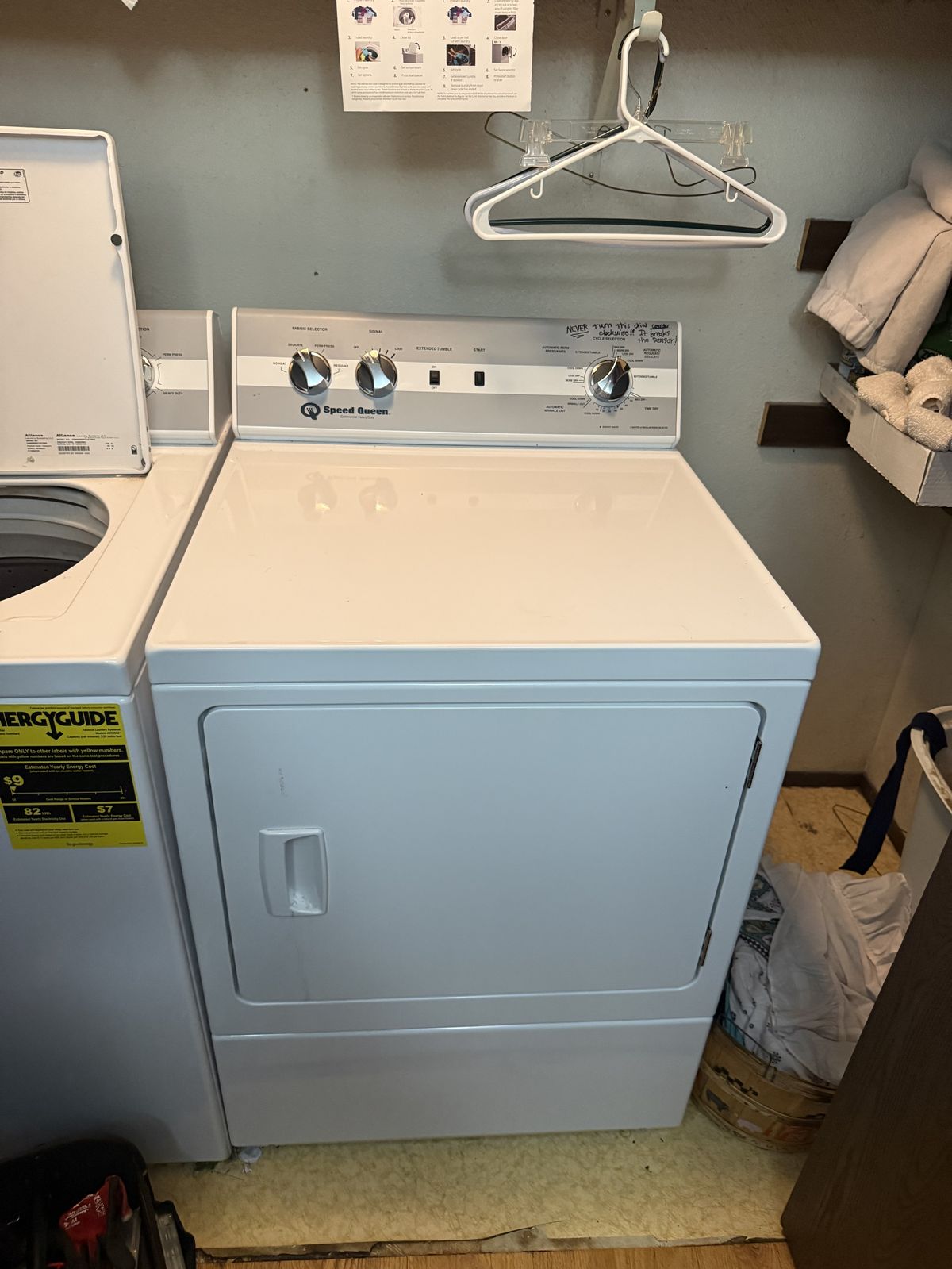
The buzzer sounds, the door opens, and the jeans are still cold at the waistband. Or the reverse: the auto cycle hums along for well over an hour and the towels come out crisp and too hot to fold. Opposite complaints, and quite often the same culprit. On most current dryers, sensor cycles do not run on a clock. They end when two metal strips inside the drum stop feeling wet fabric. Here is how that reading works, why it goes wrong, and what to check in a South Sound laundry room before anyone removes a panel.
How two metal strips decide your laundry is dry
Look just inside the door opening, usually on the lint filter housing or the lower front lip of the drum, and you will find two parallel metal bars a finger's width apart. When a damp sleeve or towel drapes across both, it closes a tiny low-voltage circuit, and the control board registers a wet hit. Early in a load the hits come constantly. As the fabric dries they thin out, and once they fall below a threshold, the control adds a few minutes of tumbling and a cool-down, then shuts off. Whirlpool, Maytag, GE, LG, Samsung and Electrolux dryers all use some version of this idea, in gas and electric models alike.
The dryness setting changes how the control interprets those hits. Less Dry ends the cycle sooner after the wet signals fade; More Dry keeps tumbling longer. A household that switched to Less Dry for one sweater and never switched back will find damp seams on every towel load, and that is a setting, not a failure. Before blaming any part, check the knob or touchpad and run a normal load on the normal setting. It also helps to know that a dryer cannot sense moisture it never touches. A thick comforter that rolls into a ball can feel dry on the outside while its core stays soaked.
Why the cycle ends with damp clothes
The most common reason is a film on the bars. Dryer sheets and liquid fabric softener leave a thin waxy coating, and so does detergent residue carried over from the washer. That coating acts like insulation: wet fabric touches the metal, but the circuit barely registers it, so the control decides the load is done. Most Olympia taps draw on the McAllister Wellfield, which runs soft at roughly 50–60 mg/L, so a load gets clean on a fraction of the dose printed on the cap. Overdosing in soft water leaves residue in the fabric, and some of it gets rubbed onto the bars, one load after another.
Load size plays a part too. Two shirts and a pair of socks can tumble for twenty minutes without ever bridging both bars, so the control sees nothing wet and quits. Mixed loads fool it a different way: light synthetics dry fast and brush the bars often, while heavy cotton hoodies are still damp at the cuffs. Sorting heavy from light, and adding a couple of dry towels to a very small load, gives the sensor more fabric to read. A broken or unplugged sensor wire can also cause early stops, because the control never receives a wet signal at all, but that is far less common than plain residue.
Why the cycle runs long and never calls it done
The reverse complaint has two very different causes, and the first question is whether the clothes come out hot and bone dry or still damp. Hot and bone dry after a long run points at the sensor circuit reading wet when nothing is wet. A harness pinched against the cabinet, lint paste packed between the bars, a hairpin lodged across them, or a control board fault can all hold the circuit in the wet state. The control keeps going until it reaches the maximum time it allows for an auto cycle. That over-drying shrinks clothes and adds hours of wear to the heating parts.
Damp clothes after a long run is a different story, and usually not the sensor at all. The dryer is failing to remove moisture, so the bars keep reporting the truth. Restricted airflow is the leading cause around here. With humidity near 80 percent and roughly 160 rainy days a year, ducts through crawlspaces collect condensation, and damp lint packs into stubborn plugs. Drying also drags when exhaust travels far, as in many two-story houses, when foil ducting gets flattened behind the dryer, or when moss and fir needles clog the outside hood. Weak heat, from a tired igniter on a gas dryer or an open element on an electric one, does the same.
Where our crew works
Tap a town on the map to open its page. Our crew covers Olympia, Lacey, Tumwater, Yelm, Tenino and Rainier.
Cleaning the sensor bars in five minutes
Unplug the dryer first. On a gas or propane model, unplug it and leave the gas valve and connector alone. Find the bars, then wipe them with a soft cloth dampened with rubbing alcohol until the cloth comes away clean. Stubborn film yields to a nonabrasive pad and a little patience; skip steel wool, sandpaper and harsh powders, which scratch the metal and give residue new places to cling. Let the alcohol evaporate, plug the dryer back in and run a test: a medium load of bath towels, no dryer sheet, normal heat, normal dryness. Towels make a good test because they are thick and easy to judge.
Read the result carefully. If the towels finish dry in a sensible time, the bars were the problem, and a regular wipe will keep them accurate. If the cycle stopped early again with damp towels, look at airflow next, because a dryer that cannot move air may hit its cutoff before the load dries. If the towels came out hot and crisp after a very long run, the sensor circuit or control is suspect, and that is meter work for our technicians. Note what happened and how long it took; those two details tell us which parts to load before we head your way.
What our technicians test when cleaning isn't enough
We start where the symptoms point and work with a meter instead of guesses. For an early-stop dryer, we check the bars and harness for continuity and for shorts to the cabinet, then watch the control respond to a damp towel laid across the bars. For a run-forever dryer, we hunt for the short holding the circuit wet and test the board's sensor input. Heat comes next: on a gas unit we test the igniter, the coils on the valve and the flame sensor, and on an electric one the element plus the high-limit and cycling thermostats. A blown thermal fuse is replaced along with whatever made it blow, and it is never bypassed.
Airflow gets a number, not a hunch. We read the airflow at the hood outside, slide the dryer out to see the short transition hose, and check the blower wheel for packed lint. Plenty of visits end with a sensor cleaning plus a vent fix rather than any new part, and that suits us; the goal is a dryer that stops when the load is dry. When we know the cause, we write one fixed price and wait for your yes before turning a screw. Sensor bars, thermostats and fuses for common models travel with us; a board or harness may need ordering, and we add nothing to the bill for coming back to put it in.
Laundry habits that keep auto-dry accurate
A few small changes keep sensor cycles trustworthy. Dose detergent for the load and your tap water, not the cap line; that pays off most in Olympia and across much of Lacey and Tumwater. Use dryer sheets sparingly or switch to wool dryer balls, which leave no coating. Empty the lint screen each time you start the dryer, and monthly run it under the tap: if water beads up and sits on the mesh, softener film is clogging it, and a soft brush with warm soapy water clears it. Fill the drum about halfway to two-thirds so clothes tumble across the bars.
Care tip: Once a month, unplug the dryer and wipe the two sensor bars with rubbing alcohol on a soft cloth. If you use dryer sheets or liquid softener with every load, make it every couple of weeks. The job takes two minutes and keeps the auto cycle reading wet fabric the way it was designed to.
Questions we get about this
Why does my dryer stop after fifteen minutes with the clothes still wet?
Usually the sensor bars are coated with softener or detergent film, so wet fabric barely registers and the control decides the load is dry. A very small load can do the same thing by never touching the bars. Clean the bars with rubbing alcohol, then test with a medium towel load and no dryer sheet. If the early stops continue after that, the sensor wiring or the airflow needs a closer look from our team.
Can I just switch to timed dry and ignore the sensor?
As a short-term workaround, yes. Timed dry ignores the bars and runs for the minutes you set. The catch is that it can hide a real problem: if timed loads also come out damp, the dryer has an airflow or heat fault, and a clogged vent left in place only gets worse and runs hotter. Use timed dry to get through the week, and book a look if loads still need two cycles.
Do wool dryer balls affect the moisture sensor the way dryer sheets do?
No. Wool balls leave no coating, so they are a sensor-friendly swap for sheets. They also separate the load a little, which helps warm air reach the middle of a big batch of towels. Dryer sheets and liquid softener are the main sources of film on the bars. If you like the scent, try a half sheet and wipe the bars more often, or add softener to fewer loads.
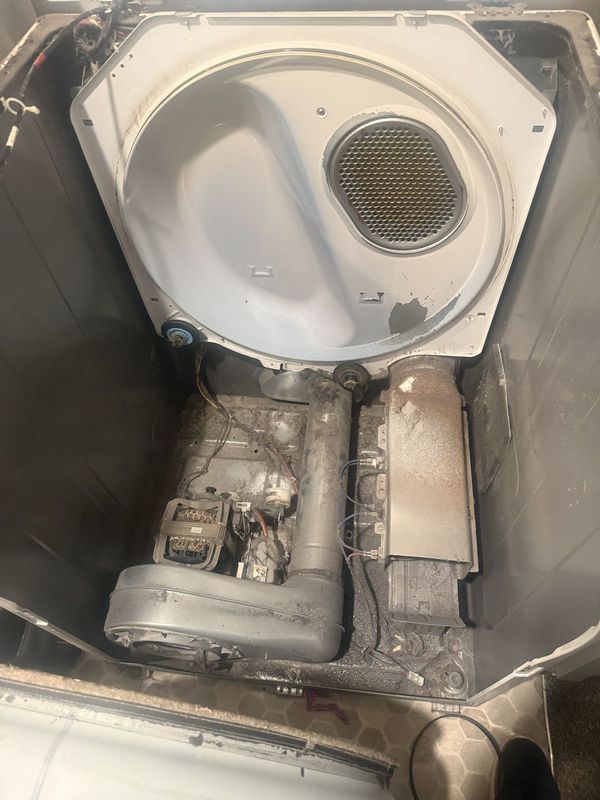
Auto-dry still guessing wrong? Let us meter it
Our team tests the sensor circuit, heat and venting in one visit. The $97 diagnostic goes toward the repair in full if you approve it; if you would rather not, that $97 is all you pay.