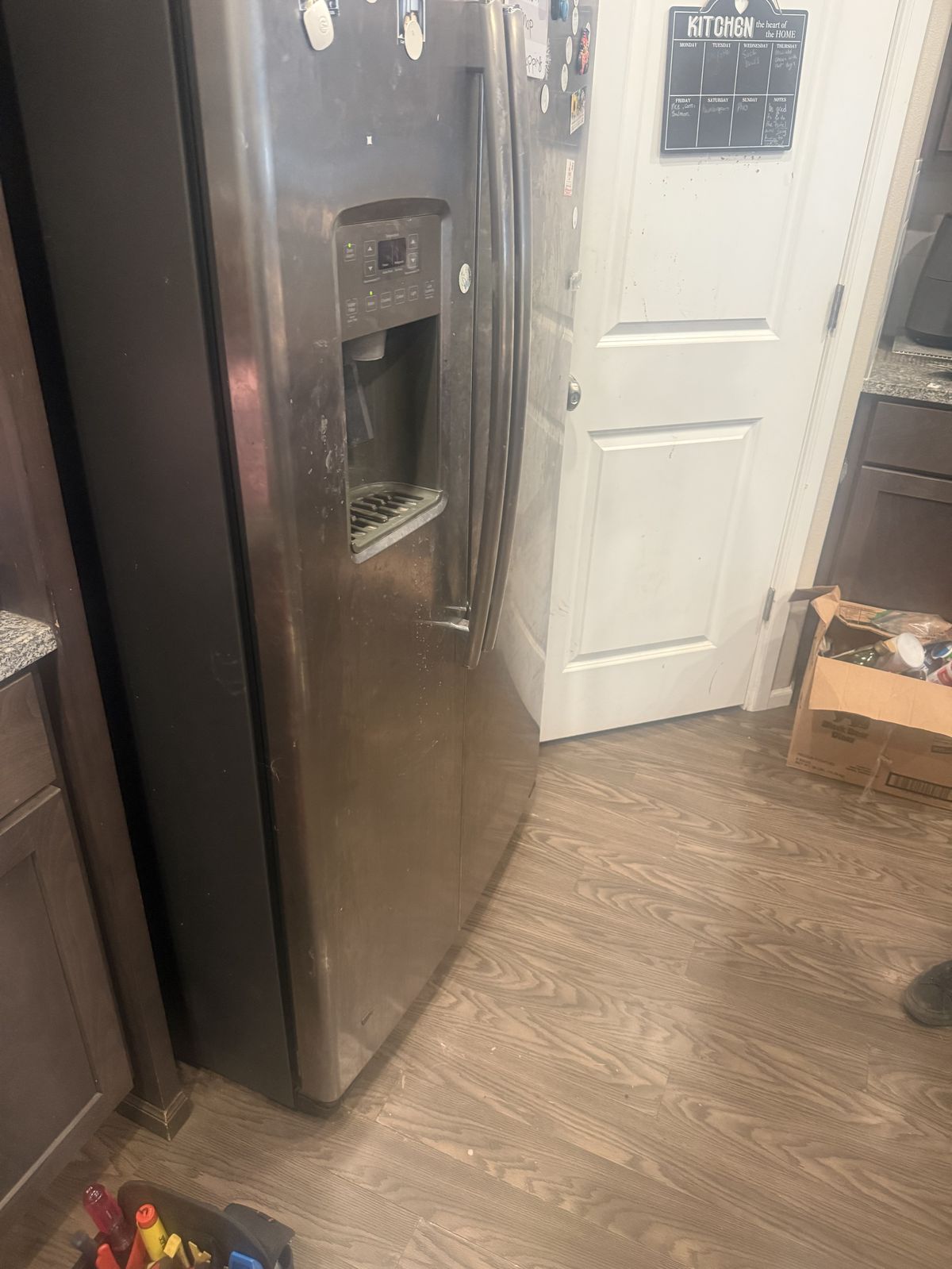
Before you blame a leak, look at exactly where the water sits. A line of beads along the freezer door edge, a fog that settles on the glass shelves an hour after you wiped them, a shallow pond under the crisper drawers: each is moisture from the air meeting a cold surface, and each points to a different part. In a region where the air hangs near 80 percent humidity for much of the year, refrigerators reveal small faults as water long before they reveal them as warm milk. This guide sorts the clues the way our technicians do.
Map the moisture before you reach for a towel
Start with location, because the spot tells the story. Beads on the outside of the doors, along the seam between French doors, or on the strip of cabinet between the freezer and fresh-food sections mean room air is touching metal that has gotten too cool. Fog or droplets on the interior walls, shelves and the sides of jars mean damp room air is getting inside and dropping its water on the coldest surfaces. Standing water under the crisper drawers, or a sheet of ice across the freezer floor, is a separate problem altogether: melt water from the defrost cycle that can't find its way out.
Timing matters as much as location. Sweat that shows up only on muggy afternoons or after a long stretch of stovetop steam is simply the air doing what air does. Sweat that returns within an hour of every wipe, in any weather, means a part has stopped doing its job. Jot down where you found water, how much, and what the weather was like, and snap a phone photo of the droplets. Those notes let our technicians arrive with a short list instead of a long one, and they keep you from replacing a door gasket when the real culprit is a plugged drain.
Why our wet climate makes small faults look big
Condensation needs two things: humid air and a surface colder than that air's dew point. The South Sound supplies the first ingredient most of the year. Roughly 50 inches of rain falls here on about 160 days, November is the wettest month, and fall and winter bring stretches of fog. Indoors, houses stay closed up against the weather, so steam from the stovetop, the dishwasher and laundry drying on racks lingers in the kitchen air. A refrigerator that would stay dry in a desert kitchen shows every weak seal and every tired heater here.
The season shifts the pattern. Exterior sweat tends to appear on damp, mild days when the kitchen air is heavy and the cabinet face stays cool. Interior fog tends to follow busy days with lots of door openings, such as a holiday baking marathon or a house full of guests. The garage is a climate of its own: a second refrigerator in a Tumwater or Lacey garage sits in damp, unheated air and often beads up on the outside through fall and winter. Expect some moisture in those settings. Persistent water in a heated kitchen with ordinary use is the case that deserves a closer look.
Sweat on the cabinet face: anti-sweat heaters and the energy setting
Behind the cabinet face, nearly every French-door unit, most side-by-sides and a good share of top-freezer models hide small low-wattage heaters, typically along the center rail, called the mullion, and around the freezer opening. Their only job is to keep those strips of steel slightly warmer than the room's dew point so water can't form on them. When one of these heaters or its wiring fails, the result is a stripe of sweat in a precise place: down the middle of a French-door pair, along the freezer door frame, or across the divider. A worn gasket can leave a similar stripe, which is why our technicians test both before naming a part.
Before any of that, check the controls. Many refrigerators have a switch or menu setting labeled “Energy Saver,” “Anti-Sweat” or something close to it that turns those heaters down or off. In a dry climate the energy setting makes sense; in ours it is a common reason a healthy cabinet drips. Switch it so the heaters run, which on most models means turning the energy-saving mode off, then give the refrigerator a full day and see whether the stripe dries. If it does, you have your answer. If it doesn't, or the setting was already right, the heater circuit needs a meter, and that is work for our technicians.
Where our crew works
Tap a town on the map to open its page. Our crew covers Olympia, Lacey, Tumwater, Yelm, Tenino and Rainier.
Fog on the shelves: the seal, the swing and kitchen habits
Interior condensation means outside air is getting in faster than the refrigerator can dry it, and the door gasket is the first suspect. Close the door on a slip of paper or a dollar bill at intervals all the way around, then pull: a seal that grips is doing its job, and a strip that comes loose without any drag marks a gap. Hinge-side corners are the usual weak points. Then check the swing. Open the door about halfway and let go. Most refrigerators are set with a slight backward tilt so the doors drift shut on their own; if yours stops short, the leveling legs or rollers need adjusting.
Habits matter more than most people expect. Uncovered soup pots, a bowl of rinsed berries, a pitcher without a lid and containers of hot leftovers all release moisture inside the cabinet. Long, browsing door openings bring in a fresh load of damp air each time, and in our climate that air carries plenty of water. Crisper sliders set to high humidity on both drawers can leave beads on the drawer lids. Cover containers, close the door while you decide what to make for dinner, and set one crisper to low. If the fog fades within a few days, the refrigerator was fine all along.
Puddles and ice sheets point to the defrost drain
A pool beneath the crisper drawers, drips from the bottom of the fresh-food side, or a slab of ice spreading across the freezer floor seldom comes from room air at all. That water is left over from the automatic defrost cycle; normally it trickles through a drain tube into a shallow tray below the cabinet, and heat coming off the condenser dries it away. When food crumbs, mold or ice plug the drain opening, the water backs up and settles at the lowest point inside instead. In a freezer, that backup refreezes and can climb until it blocks the evaporator fan or jams the ice maker.
On some top-freezer models the drain opening is visible at the back of the freezer floor or the fresh-food compartment, and you can clear surface debris there after unplugging the refrigerator. Many current models hide the drain behind the evaporator cover, though, and an ice plug back there usually traces to a defrost heater, or on some models a drain heater, that isn't doing its job. Pouring boiling water down a hidden drain or chipping at freezer ice with a knife risks split tubing and a cracked liner. That is the point to call us; a plugged defrost drain is a repair, not a weekly chore.
What a condensation visit looks like with our crew
Our technicians begin with the same map you made: where the water forms, when, and how much. From there the checks run in order. We work the paper test around every door, check door alignment and the cabinet's tilt, read compartment temperatures with a probe rather than trusting the dial, and test the anti-sweat heaters and their control. If water is pooling, the evaporator cover comes off so we can read the frost pattern and test the defrost heater, its thermostat or sensor, and the drain path. Heaters, drain parts and many gaskets ride on our van; a part made only for your model gets ordered, and putting it in on the follow-up visit adds nothing for the extra drive. You approve a single written quote before anything gets repaired.
Care tip: Once a month, run a soft cloth dipped in warm, soapy water through the gasket folds on every door, then dry them with a towel. Mildew and sticky residue both weaken the seal, and a clean gasket shows tears and flattened corners you would otherwise miss. Skip bleach and solvent sprays, which stiffen the rubber.
Questions we get about this
Is a little sweat on my fridge doors normal on foggy fall mornings?
A light film that appears on the dampest days and dries by itself is usually the weather, not the refrigerator. If the beads gather in a neat line along the center rail or freezer frame, return within an hour of wiping, or run down onto the floor, an anti-sweat heater, the energy-saving setting or a door seal is likely involved and worth having checked.
Will a dehumidifier stop my refrigerator from sweating?
It can reduce the problem in a damp kitchen or garage, and running the range hood and bathroom fans helps as well. It won't repair a failed mullion heater or a torn gasket, though, and drying the room can mask a fault that keeps getting worse. Check the energy-saving setting and the door seals first; if the sweating continues in normal humidity, have the refrigerator tested.
Why does my garage refrigerator in Lacey drip on the outside all winter?
An unheated garage stays damp through the wet months, and a refrigerator's steel shell out there can sit right at the air's dew point, so some exterior moisture is expected. Heavy, constant dripping is different: check that the door seals grip and that the cabinet tilts slightly back. Also confirm the model is rated for garage temperatures, since many refrigerators are not designed for cold, unheated spaces.
Refrigerator dripping, fogging or icing up?
Tell us where the water shows up and we will test the seals, heaters and drain in one visit. The $97 diagnostic counts toward the repair if you go ahead and is the only charge if you don't.