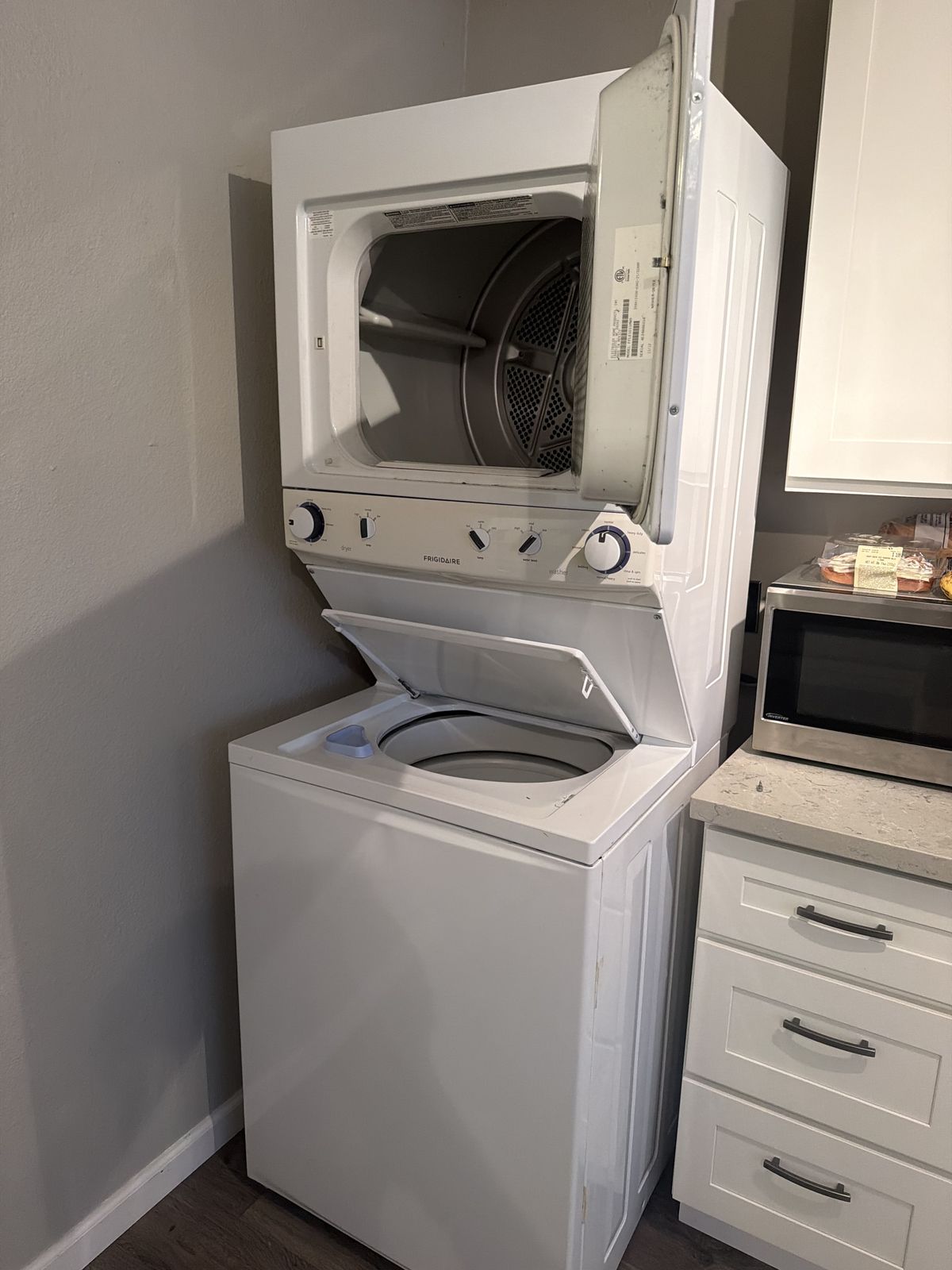
Towels that come out soaked and still carrying detergent are often the first hint. The washer fills on time, drains on time and may even spin, but the back-and-forth motion that does the actual cleaning never happens. A top-loader that won't agitate has a mechanical problem with a fairly short list of suspects, and most of that list can be narrowed down standing at the machine with the power off. The tests differ depending on whether your washer has a tall center agitator or a low impeller plate in the bottom of the tub, so start there.
Agitator post or impeller plate: two different machines
A tall agitator column in the middle of the tub marks a traditional design. Many of the older machines in Olympia's Eastside, Westside and Southeast neighborhoods are Whirlpool-built direct-drive washers sold under the Whirlpool, Kenmore and Roper names, along with belt-drive Maytag and GE models. Their no-agitate failures are mostly mechanical: a motor coupler, the agitator's internal ratchets, a drive block or the transmission. A low, wide plate in the bottom of the tub marks an impeller washer, the high-efficiency design common in newer Lacey, Hawks Prairie and Tumwater homes. Impeller machines use less water and a different drive, so their failure list leans toward shifters, sensors and belts.
Some newer agitator washers use the same high-efficiency drive as impeller models with a shorter agitator on top, so the shape of the post is not a guarantee. The model sticker, usually under the lid or on the back of the cabinet, settles the question. It also helps to know what normal looks like. High-efficiency top-loaders wash in very little water and move clothes with a slow, deliberate sweep rather than the vigorous churn of an older machine. Owners sometimes read that as a failure. Clothes that roll over during the wash and come out clean mean the machine is working exactly as it was built to work.
The hand test for an agitator washer
Unplug the washer and empty the tub. Many agitators have two parts: a lower skirt fixed to the drive and an upper barrel with spiral fins. Turn the upper barrel by hand. On a dual-action agitator, it should turn smoothly one way and catch the other way, the way a ratchet does. If it spins loose in both directions, the small plastic cams inside, called agitator dogs, have worn smooth, and the upper section no longer pulls clothes down. That kit is one of the most common top-loader repairs we do. Clothes still move a little in this case, but loads wash poorly and stay tangled near the top.
Now grip the lower part and turn it. If the whole agitator turns easily while nothing seems to move beneath it, the drive block or the splines inside it may be stripped, or the bolt holding the agitator to the shaft has worked loose. If the agitator will not budge at all, something may be jammed beneath it or the transmission may be locked. Small items, from socks to bra underwires, slip under agitators more often than people expect. These checks are safe with the power off. Pulling the agitator to look underneath takes the right tools, so many owners leave that step to our technicians.
Listen during the wash: whir, hum or silence
Plug the washer back in, start a wash cycle and listen once the tub fills. A steady motor whir with no agitation and no spin on an older direct-drive machine is the classic sign of a broken motor coupler, a set of plastic and rubber parts built to give way before the motor or transmission takes damage. A machine that spins normally but will not agitate points to the agitator dogs, the drive block or wear inside the transmission, or on belt-drive models, the belt or clutch. A low hum with no motor movement means the motor is stalled; stop the cycle right away, since a stalled motor heats quickly.
Silence is its own clue. If the washer fills and then nothing happens at all, the control may not have permission to run the motor. On many top-loaders, the lid switch or lid lock must report the lid closed before the motor starts, and a worn switch, a broken actuator tab on the lid or a failed lock stops everything. Some machines blink a lid light or show a code. Never tape, jumper or bypass a lid switch or lock; they keep hands away from a moving basket. Other silent causes include a tripped motor overload, a failed timer contact on older dial machines, or a fault in an electronic control.
Where our crew works
Tap a town on the map to open its page. Our crew covers Olympia, Lacey, Tumwater, Yelm, Tenino and Rainier.
Impeller washers: shifters, sensors and belts
On many Whirlpool, Maytag and Kenmore impeller models, a shift actuator mounted under the tub switches the drive between wash and spin. When it fails, the washer may fill and drain but never agitate, or agitate and never spin, often with an error code on the display. GE impeller washers use a similar mode shifter. LG and Samsung top-loaders use a direct-drive motor with a rotor position sensor that tells the control where the motor is; a failed sensor or a loose harness can leave the impeller twitching or motionless. Some models use a drive belt, which stretches or slips. We test these parts with a meter and by watching the drive engage.
Overloading and the low-water wash
Impeller washers clean by rubbing clothes against each other as the plate rolls them through the water. Pack the tub to the brim and the load cannot turn over; the impeller may strain, stall or barely move, and the control may stop with an error. Keep loads loose and below the top of the basket, and wash bulky items such as comforters on the bulky setting, one at a time. The same goes for agitator machines, which wash poorly when clothes are packed too tightly to circulate. A household that recently switched to bigger, heavier loads and then noticed weak agitation should try a smaller load before booking a visit.
Fix it or retire it, and what the visit covers
Couplers, agitator dog kits, drive blocks, lid switches, shift actuators and belts are routine repairs, and the common ones ride on our van, so a no-agitate washer usually gets fixed in the same visit. Replacing a transmission on a very old machine deserves more thought, so we put the repair and the state of the rest of the washer on paper for you to weigh. Signs that point toward retirement include a rusted-through cabinet, a leaking outer tub, or several worn parts at once. If the washer is still under the manufacturer's warranty, start with them. From South Capitol to Rainier, the process is the same: test first, then quote.
Age alone is not a reason to retire a top-loader. The older direct-drive and belt-drive machines in many South Capitol and Northeast Olympia basements were built around simple, serviceable parts, and many of those parts remain easy to find. Newer high-efficiency models lean on sensors and electronic controls, which are also repairable but call for a meter rather than a hunch. Either way, the hand and listening results you gathered above save time. Pass them along when you book, snap the model sticker with your phone, and the right coupler, dog kit, shifter or lid lock is far more likely to be on the van.
Care tip: Every few months, unplug the washer, empty the tub and turn the upper barrel of the agitator by hand to feel for the ratchet catch. Then check the gap at the base of the agitator, or around the impeller rim, for socks, coins and hair ties before they wedge into the drive.
Questions we get about this
The top half of my agitator spins loose in both directions. Does that explain poor washing?
Very likely. On a dual-action agitator, the upper barrel should ratchet one way and catch the other. When it turns loose both ways, the agitator dogs inside have worn, and the top section stops pulling clothes down into the water. Loads come out unevenly washed, often with dry patches or tangled items near the top. A replacement dog kit restores the action, and our technicians carry them for common models.
My newer top-loader barely moves the clothes and uses very little water. Is it broken?
Not necessarily. High-efficiency top-loaders sense the load, add a small amount of water and turn clothes with a slow sweep instead of a vigorous churn. If the clothes rotate during the wash and come out clean, that is normal operation. If the impeller never moves, moves only in short twitches, or the washer stops with a code, a shifter, sensor, belt or lid lock may be at fault.
Can I keep using a washer that hums but doesn't move?
No. A hum without movement usually means the motor has power but is stalled, whether by a jam, a locked transmission or a failing motor part. A stalled motor overheats quickly and can damage itself or trip its overload. Stop the cycle, unplug the washer and take the clothes out if you can. Note whether the hum happens during wash, spin or both, and share that detail when you book.
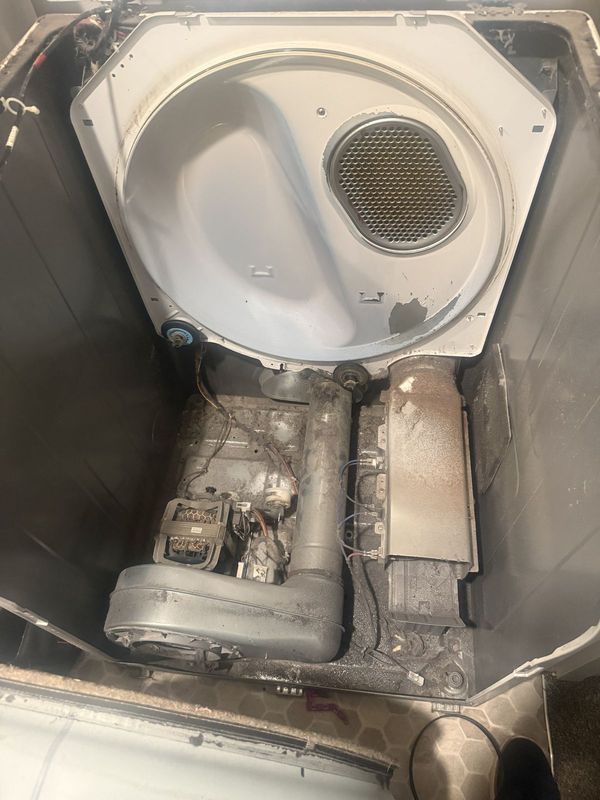
Washer filling and draining but not washing?
We test the drive, lid lock and controls, then quote one fixed price. $97 covers the diagnosis, and the full amount comes off the repair if you proceed; if you don't, you owe nothing beyond it.