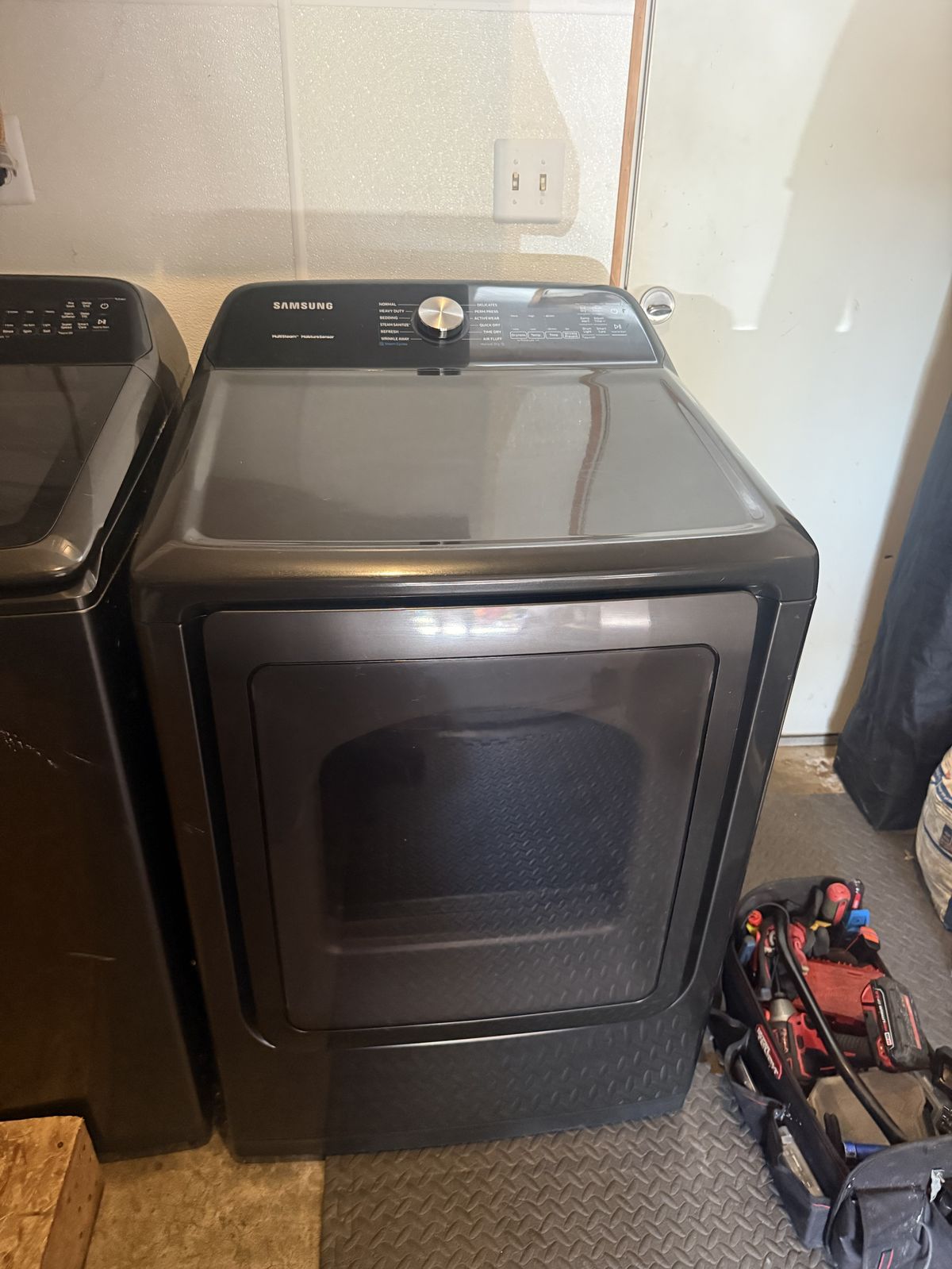
A healthy washer fills with a firm rush you can hear from the next room. When that sound shrinks to a thin hiss, or the display sits on the fill step while the tub stays nearly dry, water is getting held up somewhere between the shutoff valves on the wall and the inside of the drum. That path is short and has only a handful of stops, and each one fails with its own clue. Work through them in order, from the easiest to check to the ones that need a meter, and you will usually find the culprit.
Shutoff valves and fill hoses behind the machine
Pull the washer forward far enough to see both supply valves and the hoses. Each valve should be fully open; after a move, a plumbing repair or new flooring, it is common for one to be left a quarter turn short. Older multi-turn valves can also fail internally, with the handle turning while the gate stays mostly shut. Then follow each hose. A washer pushed tight against the wall can pinch a hose into a sharp kink, and old rubber hoses can break down inside, where a loose flap of lining acts like a valve. Aging rubber hoses are worth replacing with braided stainless ones anyway.
Next, work out which side is slow. Run a cold rinse and then a hot wash, and watch or listen to each. Weak flow on only one temperature points to that side's valve, hose, screen or coil. Slow fill on both points to something shared: the house supply, the water pressure, or both screens clogged at once. On many front-load washers, water passes through the detergent dispenser on its way in, and a drawer caked with detergent and softener can restrict flow. That is common in soft-water homes, where people tend to use more detergent than they need. Pull the drawer and rinse it before moving on.
Inlet screens: the first stop for sediment
Where each hose threads onto the washer, a small mesh screen sits inside the valve inlet. Its job is to catch grit before it reaches the valve, and it does that job until it clogs. Olympia households rarely see these screens choke: most of the city's supply is drawn from the McAllister Wellfield, where hardness sits around 50–60 mg/L, and the usual exception is a round of water main work that shakes loose some sediment. Across the line in Lacey, around 20 city wells feed the taps, and while most run clean, a handful read slightly high on iron and manganese against the guideline for taste and staining. On private wells around Yelm, Tenino, Rainier and the Littlerock Road corridor, iron and manganese sediment loads screens on a regular schedule.
To clean them, unplug the washer and turn off both valves. Set a towel and a shallow pan under the connections, unscrew the hoses slowly to release pressure, and look into the valve ports. Rinse the screens in place or ease them out gently with needle-nose pliers, taking care not to tear the mesh. Some screens are molded into the valve and should not be pulled; rinse those where they sit. Reattach the hoses hand-tight plus a snug quarter turn, open the valves and check for drips. If the screens were packed with orange or black grit, check the cartridge in the house sediment filter too.
The inlet valve: an electric gate with two coils
Behind the screens sits the inlet valve, opened by electric coils called solenoids, usually one for hot and one for cold, with extra coils on many front-loaders that route water through the dispenser compartments. When the control calls for water, a coil lifts a small plunger and water flows. A weak coil opens only partway, giving a trickle on one temperature. A dead coil gives no water on that side at all. A coil that hums without opening is a sign to stop the cycle, since it can overheat. Debris that slips past a torn screen can also lodge inside the valve and hold it partly closed.
The opposite failure deserves a warning. A valve that sticks open keeps feeding water with the washer off, so a top-loader slowly fills on its own or a front-loader overflows past the door seal. If you ever find water rising in a machine that is not running, shut off both supply valves right away and unplug it. On a visit, our technicians measure each coil's resistance, confirm that the control is sending power during fill, and check flow with the valve open. We stock inlet valves for the common models in the truck, which turns most of these into one-visit repairs from start to finish.
Where our crew works
Tap a town on the map to open its page. Our crew covers Olympia, Lacey, Tumwater, Yelm, Tenino and Rainier.
Pressure sensors, error codes and the door lock
A washer only fills while its water level sensor reports that the tub needs more. That sensor reads air pressure through a thin tube from the bottom of the tub, and if the tube is kinked, clogged or cracked, or the sensor itself has failed, the control can believe the tub is full when it is nearly empty and stop filling early. Many machines also refuse to fill until the door or lid lock confirms it is closed and locked; never bypass that lock, because it keeps hands away from a moving drum. Fill problems often bring up codes, such as IE on many LG washers, 4C or 4E on many Samsung models, or LF on some Whirlpool and Maytag machines.
When the house supply is the real bottleneck
Sometimes the washer is just the loudest witness. Open the laundry sink or a nearby bathroom faucet; if it runs weak too, look upstream. On a private well, a waterlogged pressure tank or a failing pressure switch makes pressure swing, and a clogged whole-house sediment filter starves every fixture. Freezing is another local cause. Thurston County sees about 78 freezing nights a year, and supply lines in an unheated garage or along a crawlspace wall can freeze on a cold snap. Thaw them slowly with a hair dryer kept away from water and anything flammable, never with an open flame, and check the hoses for splits afterward.
Power outages add a twist for well homes. The windstorm at the end of September 2026 darkened PSE homes and businesses by the tens of thousands, with the heaviest losses in the stretch of Thurston County below Olympia, and on every well property out there the pump went quiet along with the lights. When power returns, the first water through the lines can carry stirred-up sediment and air, which is exactly when washer screens tend to clog. If the washer filled poorly after the lights came back, run a faucet until the water clears, clean the screens and see whether the problem goes away before booking. Some washers also need a fresh cycle start after an outage.
Booking a slow-fill visit with the right details
A few details shared when you book help us arrive with the likely part. Tell us whether the washer trickles or gets nothing, whether one temperature or both is affected, whether you are on city water or a well, and what the display shows if it flashes a code. Snap the model sticker too, usually found inside the lid or door, or else on the cabinet's back panel; it settles which valve and sensor fit. On site, we put a gauge on the supply, look at the screens, meter the valve coils, test the level sensor and its tube, and check the dispenser path. No repair starts until you have one written quote in hand.
Care tip: Once a year, or every few months on a well, turn off the washer's supply valves, unscrew the hoses and look at the inlet screens. Rinse away any grit, check the hoses for bulges or cracks near the ends, and replace aging rubber hoses with braided stainless before they fail.
Questions we get about this
My washer fills fine on cold but barely on hot. What does that point to?
A problem on the hot side only: a clogged hot inlet screen, a kinked hot hose, a partly closed hot valve on the wall, or a weak hot coil on the inlet valve. Check the faucet nearest the laundry for hot flow too, since a supply problem would show there as well. If the hot side looks clear and the faucet runs normally, the valve coil is the likely cause.
We live on a well near Yelm and the washer screens keep clogging. Is that normal?
It is common on private wells that carry iron, manganese or fine sand. The screens are doing their job, but they need cleaning more often than in town. A whole-house sediment filter with a cartridge you change on schedule takes most of that load off the washer, dishwasher and other fixtures. If the sediment showed up suddenly, have a well professional look at the pump or the well itself.
Should I keep running a washer whose inlet valve hums but lets no water in?
No. A humming coil that does not open is drawing power without moving, and it can overheat and fail completely. End the cycle, pull the plug and close both supply valves. Check the screens and hoses first, since a clog can make a valve struggle, but if the hum continues with good water supply, the valve needs replacing. It is a common, stocked part for most models.
Washer still filling at a trickle?
We gauge the supply, meter the valve and test the sensor in one visit. The diagnosis costs $97; approve the written quote and that amount is folded into the repair, decline it and nothing else is owed.