Oven and range repair in Olympia, burner by burner
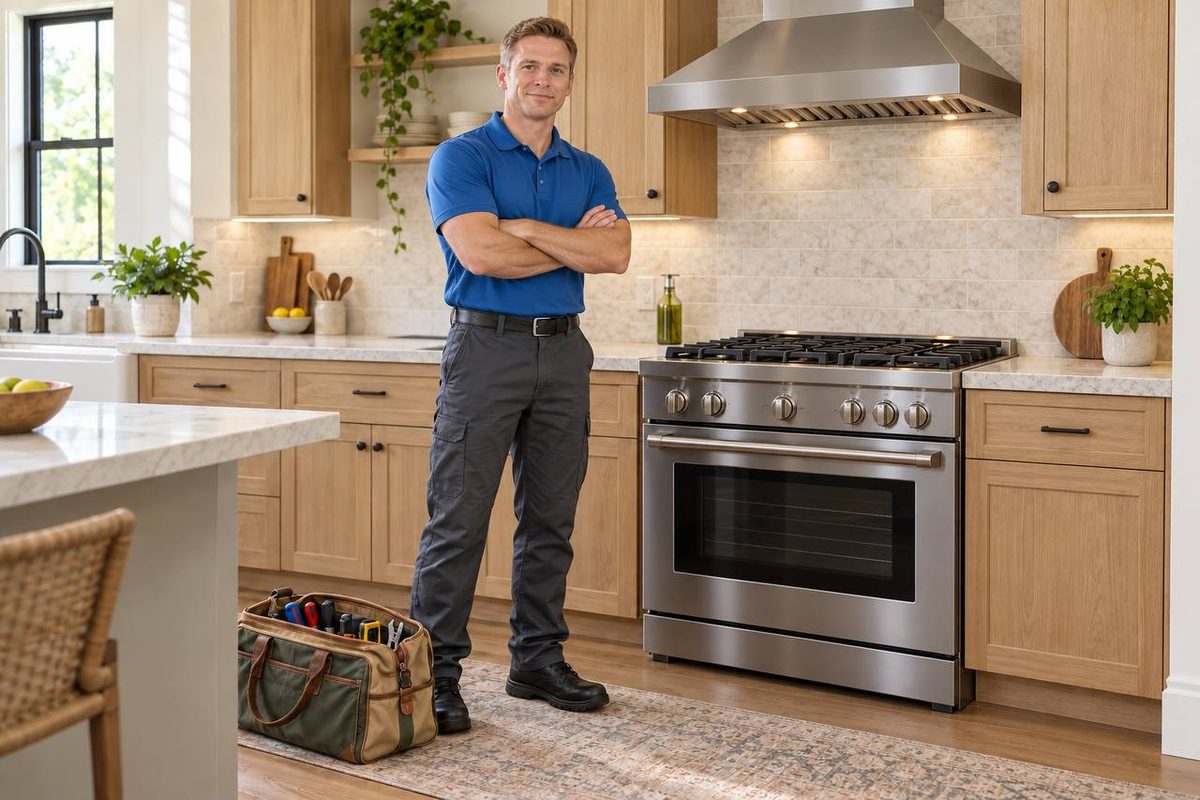
An oven fails in two ways: it stops heating, or it heats wrong. Both have a short list of causes, and our technicians work through that list with a meter and an oven thermometer rather than guesswork. On gas ovens and ranges, the bake igniter is the most common failure, followed by the safety valve, spark modules and burner switches. On electric models it is usually the bake or broil element, the temperature sensor, the control or the wiring between them. Olympia adds its own wrinkles. Natural gas is the heating fuel in more than a third of local homes, 35 to 44 percent by city, so gas ranges are common, and some kitchens only got a gas line years after the walls went up. Older houses also carry electric ranges on 240-volt circuits whose outlets and terminal blocks have seen decades of heat.
Our crew works on freestanding and slide-in ranges, wall ovens, double ovens, gas and electric cooktops and induction units. Brands we open often in Olympia include Frigidaire, GE, Whirlpool, Bosch, Café, KitchenAid, LG, GE Profile, Samsung, Maytag, Electrolux and Kenmore. Common repairs include bake and broil elements, hot-surface igniters, spark igniters and spark switches, temperature sensors, door locks after self-clean, convection fan motors, infinite switches and control boards. Many of those parts ride on the van. Safety comes first in every kitchen: any whiff of gas sends everyone outdoors, and only then does anyone phone the gas utility, never from inside. Gas valves, gas lines and live wiring are work for our technicians. For anything else, unplug the range or switch off its breaker before you take a look.
Gas, power and damp air in Olympia kitchens
Water rarely touches an oven, but Olympia’s climate still matters. Humidity near 80 percent and fall fog keep kitchens damp, and a cooktop’s spark switches and electrode tips can misfire when moisture or a boil-over sits on them. Puget Sound Energy delivers gas across much of Olympia, which keeps gas cooking common, while a few homes at the edges of town run their burners on propane. Power is the other variable. Fall and winter windstorms cut PSE service, and electronic oven controls sometimes need a reset, or fail outright, when power returns with a surge. Older homes may also have a range outlet or cord connection that runs hot under a long oven bake, which shows up as scorched terminals.
Range and oven calls in Olympia neighborhoods
- South Capitol. Historic kitchens in South Capitol mix restored cabinetry with modern ranges, including heavy pro-style gas units that arrived generations after the original kitchen. We check the gas connector, the anti-tip bracket and burner ignition. On electric ranges we inspect the outlet and the cord terminals, which can scorch on older wiring.
- Westside and Goldcrest. Plenty of Westside and Goldcrest ramblers still cook electric, with the range drawing from the 240-volt circuit the builder ran. If an element heats on one setting but not another, or the oven is sluggish, we start with a voltage reading at the range’s power connection, then move to the infinite switches, the bake element and the sensor.
- Southeast Olympia (Forest Hills, Holiday Hills). Homes in these 1950s to 1970s subdivisions run both gas and electric ranges, and the ovens see heavy holiday use. On gas models a weak hot-surface igniter tops our list: the oven takes far longer to light, or never does. If the amp reading on that igniter sits below the level the safety valve needs, the igniter gets replaced.
- Downtown and Percival Landing. Downtown condos often have compact electric ranges, wall ovens and glass or induction cooktops. Smoke from a failing element can set off building alarms, so we treat those calls seriously. We test elements, sensors and cooktop switches, and on wall ovens we confirm the cooling fan runs so the controls are not baking along with dinner.
Where our crew works
We cover all of Olympia, from South Capitol, Eastside, Westside and Goldcrest, Northeast and Bigelow to the streets between. Tap a town on the map for its page.
Oven and range symptoms we see in Olympia
- Slow-lighting gas oven in an older kitchen. If the gas oven takes noticeably longer to light than it used to, or lights and then goes out, the hot-surface igniter is usually weak. We measure its amp draw and test the safety valve. Never try to light an oven burner by hand, and if a gas smell lingers, leave and call the utility from outside.
- Dead bake element on original wiring. When the bake or broil element stays dark, we look for a visible break or blister first, then test continuity. Older Olympia homes also get their terminal lugs inspected, since a loose or burned connection can starve an element that still tests good out of the range. Elements for common models are on the van.
- Clicking burner in a damp kitchen. A burner that keeps clicking after a pot boils over usually has moisture under the cap or on the spark switch. Unplug the range, lift the cap and let the area dry fully. If clicking continues after that, we test the spark switch and spark module, and clean or replace the electrode.
- Older Olympia oven baking off temperature. If cookies scorch or roasts lag, we test the temperature sensor’s resistance, check the bake element and igniter, and compare the actual temperature with an oven thermometer over several cycles. Many controls allow a calibration offset once the parts check out, so the dial matches what the cavity is really doing.
- Blank clock after an Olympia outage. A display that stays blank, flashes or shows an error code after the power comes back can mean a tripped breaker, a blown control fuse or a failed board. Switch the breaker off for a minute, then back on. If the display still will not respond, we test the transformer, the fuse and the control itself.
What to expect from an Olympia oven visit
Tell us the fuel, whether natural gas, propane, plain electric or induction, and describe what the range is doing or failing to do. On site, our technician confirms the supply first, gas flow and ignition on gas models, incoming voltage on electric ones, then works through elements, igniters, sensors, switches and the control. You get one quote in writing, with the price fixed before any work. About the $97 diagnostic: accept the repair and all of the $97 is applied to that bill; pass on it and the $97 is your only charge. Igniters, elements and sensors often ride on the van. Boards and door locks sometimes need ordering; we bring them back and fit them, and that return costs you no extra trip fee.
Keep the range or replace it
Igniters, elements, sensors, switches and door locks are worth replacing on a range with a solid oven cavity and a working door. The question gets harder when a control board is discontinued, the cavity enamel is chipped and rusting, or a glass cooktop is cracked on an older model. A cracked glass top should not be used, though the glass is often replaceable. We give you the facts on parts availability and the condition of the rest of the range so you can weigh it. If the manufacturer’s warranty still applies, we mention that first.
Care tip: In the weeks before a holiday, leave self-clean alone on an aging oven, since those extreme temperatures stress the thermal fuse, the door lock and the electronic control. Wipe spills while the oven is warm rather than hot, and keep cooktop burner caps seated and dry so the igniters spark cleanly.
More repairs in Olympia
Same repair nearby
Repair guides
Book a repair in Olympia
One fixed quote after diagnosis. $97 diagnostic, applied to the repair if you go ahead.