The cycle ends, the display says done, and the clothes come out dripping, or the window shows a drum still holding water. Front-load washers are cautious machines: they refuse to spin when anything feels wrong, and that caution produces this exact complaint in laundry rooms from Lacey and Olympia to Tahoma Terra in Yelm. Some causes take five minutes and a towel. Others, like worn shock absorbers or a failed motor, need a technician with a meter. Here is how to tell them apart, in the order we check.
Small, lopsided loads and the balance check
Before the drum spins up, the control turns it slowly and measures how evenly the weight is spread. One heavy item on its own, such as a bath mat, a comforter or a dog bed, slumps to one side and makes the drum wobble. The washer tries to redistribute the load a few times, then either spins at a crawl or skips the spin and ends the cycle with everything soaked. Toss in a few bath towels to even out the weight, then run a drain-and-spin cycle. If it spins, the machine was protecting itself.
Also check that the washer sits level and solid. Press on each front corner; a rocking cabinet tells the balance sensor that every load is unstable, and leveling feet work loose after a move. Floors matter too. Close to half of Olympia's houses predate 1980, and in many of them the laundry room rests on a wood-framed floor with more give than concrete; a washer there can bounce even when the load is balanced. Set the machine level side to side and front to back, tighten the lock nuts on the feet, and keep it off rugs and loose platforms.
Drain pump filter and coin trap
Most front-loaders hide a drain pump filter behind a small panel near the bottom front corner. It catches coins, hair ties, buttons, bra wires, small socks and lint before they reach the pump. When it clogs, water drains slowly or not at all, and the washer will not spin a drum it thinks is full. Unplug the washer and let hot wash water cool. Lay down towels and set out a shallow pan, because even a drained-looking drum can release a lot of water. If your model has a small drain tube beside the filter, empty through that first.
Then unscrew the filter slowly, letting the remaining water out a little at a time. Rinse the filter under the tap, feel inside the opening for anything wedged against the impeller, and turn the impeller gently with a finger; it should spin with light resistance. Households on wells near Yelm, Tenino and Rainier, or along the Littlerock Road corridor, often find fine orange or brown grit here, the same iron and manganese sediment that clogs inlet screens. Thread the filter back firmly and watch for drips on the next cycle, since a cross-threaded filter is a common source of small leaks.
Too many suds on soft water
Olympia's city water is soft, in the 50 to 60 mg/L range, and the Lacey and Tumwater wells run from soft to moderately hard. Soft water dissolves detergent quickly, and front-loaders use very little water, so a full cap of detergent or a pod plus an extra splash builds thick foam. That foam cushions the drum, confuses the pressure sensor that reads the water level, and makes the control extend the rinse or refuse to spin. Some models flash a suds code; others simply end with wet clothes. Look through the glass: a layer of foam on top of the load tells the story.
Run a rinse-and-spin cycle with no detergent, repeating until the foam is gone. Going forward, use only high-efficiency detergent and start with a third to half of the line on the cap, adjusting by results; soft water rarely needs more. Extra detergent also leaves residue in the door boot, where the region's damp air helps mildew take hold. Septic tanks, common beyond city sewer lines, benefit from lighter doses as well. A washer that spins normally once the suds are gone has nothing broken, only a habit to change, and that is the easiest fix there is.
Where our crew works
Tap a town on the map to open its page. Our crew covers Olympia, Lacey, Tumwater, Yelm, Tenino and Rainier.
The door lock has to prove itself
A front-loader will not spin until the control confirms the door is locked, because a door opened at speed could injure someone. A worn latch, a cracked hook on the door, or a lock assembly that no longer reports its position all lead to the same result: the drum fills, washes and drains, then stops short of a real spin, or the lock clicks repeatedly and the cycle stalls. Check the door hook for cracks and close the door firmly. Never tape, wedge or bypass the lock. Its wires run through the door boot, where years of flexing can break them.
When the power drops mid-cycle, most washers keep the door locked while water sits in the drum, which is a safety feature, not a fault. After an outage like the one that followed the late-September 2026 windstorm south of Olympia, a locked door with water inside is the expected state. Once power returns, select drain and spin and let it finish; the lock should release a minute or two after the drum empties. Some models also have an emergency release, described in the manual, for use only after the water is out.
Shock absorbers, springs and bearings
The tub in a front-loader hangs on springs at the top and rides on shock absorbers, also called dampers, at the bottom. Worn dampers stop controlling the tub's movement, and the control responds by limiting or skipping the spin to protect the cabinet. You may hear a heavy thump as the drum speeds up, see the washer walk across the floor, or notice the tub sitting low at the front so the door boot rubs. With the washer unplugged and empty, push down on the drum's top edge through the door. It should move a little and settle quickly, not bounce.
A different sound points somewhere else. A rumble or roar that grows louder as spin speed climbs usually means the drum bearings are failing, often after water has worked past the rear seal. Rust streaks behind the drum or a gritty feel when you turn it by hand back that up. On many front-loaders, bearings mean taking the outer tub apart, a bigger repair we weigh carefully against the machine's age. Shocks and springs are a smaller job. Either way, our technicians watch the tub move and listen at speed before quoting, so the part named is the part that failed.
Motor, belt and control signs for a technician
If the drum barely turns, or the washer hums and clicks without moving, the drive side needs a look. Belt-driven models can throw or wear out a belt. Direct-drive washers, including LG and many recent Whirlpool and Samsung front-loaders, have a rotor and stator on the back of the tub, plus a position sensor that tells the control where the rotor sits. A failed sensor or a loose rotor can leave the drum still while everything else seems normal. Error codes help here, and our technicians read them through the service mode. Motors, wiring and control boards are ours to handle.
Call when the drum still holds water after you clean the coin trap, when the door will not unlock after power returns, when you hear grinding, or when you smell something hot. Our crew handles front-loaders from Olympia and Lacey to Tumwater, Yelm, Tenino and Rainier, and a same-day slot is often possible if the calendar has space. Our diagnostic is $97: go ahead with the repair and all of it is applied to the work, or decline and the $97 is the whole charge. A fixed written quote comes first. Door locks, pumps and shocks are often on the van. If the maker's warranty is still active, call the maker before us.
Care tip: When laundry is finished for the day, prop the door ajar and slide the detergent drawer partway out so both can air-dry. Each month, run a cloth through the folds of the rubber boot and clear the coin trap. In a damp laundry room, that habit heads off mildew, odor and drain trouble together.
Questions we get about this
Why will my front-loader spin a full load of towels but not a single bath mat?
A full, even load spreads its weight around the drum. A single heavy item sits in one spot, and the balance check reads it as dangerous wobble, so the control cuts the spin to protect the suspension. Wash rugs and mats with two or three towels, and skip rubber-backed rugs, which hold water and throw the drum off balance. If even balanced loads fail to spin, look at the shocks.
How often should we clean the coin trap on a washer in a Rainier home on well water?
Once a month is a good baseline for any front-loader, and more often if you see orange or brown grit when you open it. Private wells around Rainier, Tenino and Yelm can carry iron and manganese that settles in the trap and the pump. Unplug the washer, have towels and a shallow pan ready, and drain slowly. If grit returns quickly, tell us about the well when you schedule.
The power went out mid-wash in Tumwater and now the door won't open. Is it broken?
Probably not. Most front-loaders keep the door locked while water sits in the drum, outage or not. When power returns, run a drain-and-spin cycle and the lock should release shortly afterward. Do not pry the door or force the handle, because that can break the latch or the lock itself. If the drum drains but the door stays locked for more than a few minutes, the lock assembly needs testing.
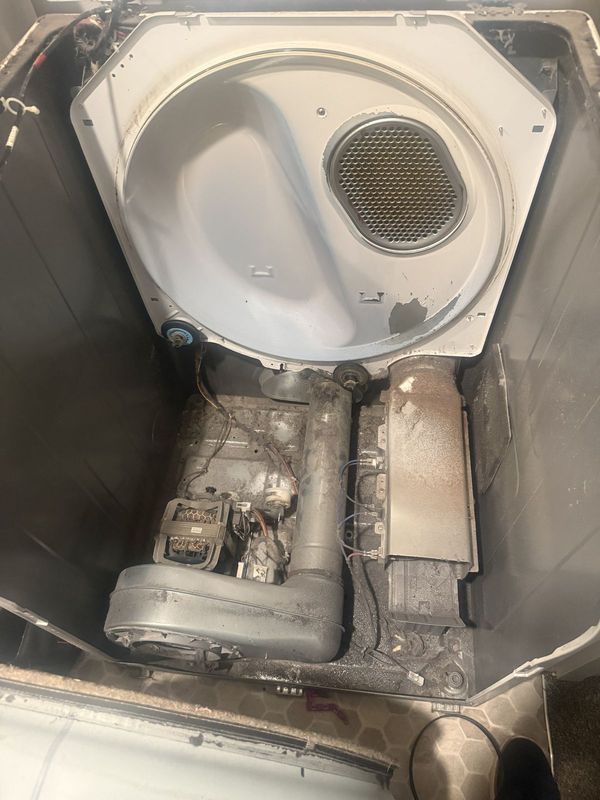
Soaked laundry and a stalled drum? Call us
Clean the trap, rule out suds, then call us if the drum still won't spin. Our crew works from Olympia, Lacey and Tumwater out to Yelm, Tenino and Rainier, and every repair goes into one fixed written quote first.