Tumwater dryer repair that checks the vent as closely as the machine
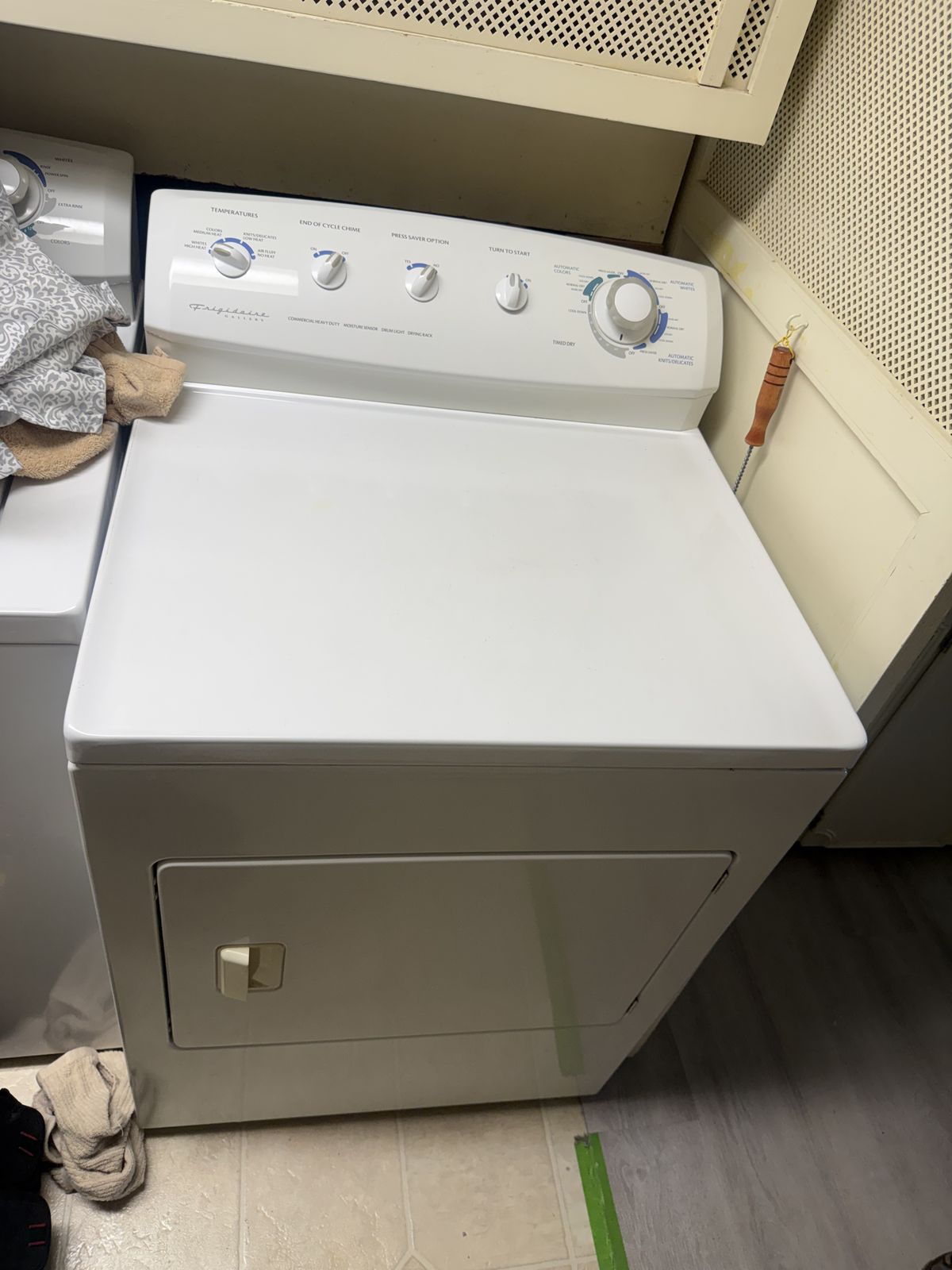
A dryer in Tumwater spends much of the year working against wet weather. About 50 inches of rain fall on roughly 160 days, November is the wettest month, and the air hangs near 80 percent humidity, so loads go in heavier and vents carry more moisture than they would in a drier climate. Add the long duct runs common in two-story 1990s and 2000s houses and you get the classic local complaint: towels that need two cycles. Our crew works on gas, propane and electric dryers alike, from Speed Queen and Maytag to LG, GE, Kenmore, Whirlpool, Electrolux and Samsung, plus the stacked pairs and laundry centers tucked into hall closets. On every Tumwater dryer service call we measure heat and airflow together, because a burned-out element and a choked vent can look identical from the laundry room.
Fuel matters here, too. Puget Sound Energy pipes natural gas into much of the city, and across the three core cities, Tumwater included, gas warms roughly 35 to 44 percent of houses, so a gas dryer in the laundry room is a common sight. Out along Littlerock Road, propane takes over, and a dryer moved from a natural-gas house needs its conversion before it will burn cleanly. Electric dryers have their own pattern: since the late-September windstorm, we have found several that tumble without heat because one leg of a 240-volt breaker tripped during the outage or the surge when service returned. Whatever the fuel, the parts list is familiar: igniters, flame sensors, gas valve coils, heating elements, thermal fuses, high-limit thermostats, belts, idler pulleys and drum rollers. Most of them ride on our van, so a dryer not heating in Tumwater is usually a one-visit job.
Rain, gas lines and long ducts: dryer conditions in Tumwater
Dryers care little about Tumwater's soft-to-moderate city water, but they care a great deal about its air. With humidity near 80 percent and frequent fall and winter fog, outside vent flaps swell, lint turns to damp felt in long runs, and ducts routed through crawlspaces collect condensation that can drip back toward the machine. Fir needles and moss build up on vent hoods, especially low ones near the ground. Fuel adds another layer: natural gas from Puget Sound Energy in town, propane on the rural edge, and 240-volt electric everywhere else. When windstorms knock out power, as the late-September storm did across south Thurston County, electric dryers can come back with a tripped breaker leg and electronic models with a control that has lost its bearings.
Dryer patterns in four Tumwater neighborhoods
- Tumwater Hill. Two-story and split-level homes on Tumwater Hill often route the dryer vent through walls and ceilings to reach the outside, and a long run with several elbows starves airflow. Trapped heat makes the high-limit thermostat cycle the burner or element over and over, until the overheating finally takes out the thermal fuse. Our technician reads the exhaust flow outside, fixes the dryer and points out where the duct is losing ground.
- Bush Prairie. Where Bush Prairie homes by the airport have natural gas, gas dryers are a staple of our calls. When the burner lights and then goes out, or the igniter glows and no flame follows, the trouble usually lies in worn valve coils or a flame sensor on its way out. We meter every part in that circuit and stay to watch one complete ignition sequence.
- Black Lake edge. Near Black Lake, damp air and fall fog keep vent ducts wet longer, and low wall hoods gather leaves, needles and moss. A stuck flap lets cold, moist air drift back down the duct and onto the lint screen. We clear the hood and transition, make sure the flap swings freely, and confirm the dryer reaches proper exhaust temperature again.
- Deschutes neighborhood by Pioneer Park. When a dryer vent near Pioneer Park runs through a crawlspace, cold ground chills the duct and moisture condenses inside it. Lint sticks to the wet walls, sagging sections pull joints apart, and water can trickle back toward the dryer. We trace the run, look for disconnected sections, and repair the dryer once airflow is restored.
Where our crew works
We cover all of Tumwater, from Tumwater Hill, Bush Prairie, Deschutes neighborhood by Pioneer Park, Littlerock Road corridor to the streets between. Tap a town on the map for its page.
Dryer symptoms Tumwater homes call us about
- Two cycles per load on Tumwater Hill. Long vents in two-story Tumwater homes are the first suspect when towels stay damp. Our technician reads airflow where the vent exits the house, looks for a crushed or kinked transition hose, and tests the heating circuit, since a choked run also forces the element or burner to cycle on the high-limit until it wears out.
- No heat after the September storm. If your electric dryer has tumbled without heat ever since the late-September outage, half of its 240-volt double breaker may have tripped. Push that breaker all the way to off and then reset it. Still no heat? We read the voltage at the terminal block and work through the thermal fuse, high-limit thermostat and element one at a time.
- Propane dryer glows but never lights. In propane homes off Littlerock Road, an igniter that glows red with no flame behind it usually points to solenoid coils that have lost strength or a flame sensor that no longer reads correctly, and a dryer moved from a natural-gas house may never have been converted for propane at all. All gas-side work stays with our technicians, who leak-check and watch a full burn.
- Damp lint in a crawlspace duct. Moisture beading inside a crawlspace vent run, lint caked onto the duct walls, or water dripping from the dryer outlet all point to condensation in a cold duct, a common sight in Tumwater's wet season. Our technician checks every joint and the way the run slopes, cleans the sections we can get at, and tells you plainly whether rerouting or insulating the duct makes sense.
- Squealing drum on rainy-season loads. Heavy, wet loads through a Tumwater winter wear drum rollers, idler pulleys, glides and belts faster. Squealing as the drum starts usually traces to an idler pulley that has run dry, while a steady thump tends to mean a roller has worn flat on one side. With the cabinet open, we spin the drum by hand and change whatever has worn.

A Tumwater dryer visit, start to finish
When you call, tell us how the dryer is fueled (a PSE gas line, a propane tank or a 240-volt outlet) and where its vent exits the house. Our technician checks voltage or gas supply first, then the heating circuit, then airflow at the hood, so the quote covers the cause and not only the part that failed last. We charge $97 to diagnose. That amount becomes part of your repair payment if you approve the work, and it stands as the single charge if you decide against it. You see one fixed written price before we turn a screw. We stock igniters, elements, thermal fuses, belts and rollers aboard. Should the fix call for a piece our supplier has to ship, our tech comes back to put it in once it lands, and that follow-up stop is not billed as a separate trip.
When a Tumwater dryer is worth fixing
Few appliances in the house reward repair as well as a dryer does. Belts, rollers, igniters, elements, fuses and thermostats can keep a solid dryer working for years, and the cabinet rarely wears out first. The calculation shifts when a newer electronic model needs a main control on top of other parts, when the drum or bearing housing is worn through, or when the dryer has run hot on a choked vent so long that wiring and insulation are scorched. You see the failed part, hear whether the vent played a role, and receive the repair price on paper, and then the decision is yours.
Care tip: Make it a habit to peel lint from the screen every time you empty the drum. Once a month, go outdoors while the dryer is running and confirm the hood flap swings wide open. Through Tumwater's wet season, moss, fir needles and leaves can close a low hood within weeks, and a blocked hood is how thermal fuses die.
More repairs in Tumwater
Same repair nearby
Repair guides
Book a repair in Tumwater
One fixed quote after diagnosis. $97 diagnostic, applied to the repair if you go ahead.